
Emergency Room Triage: How It Works & What to Expect (2026 Guide)
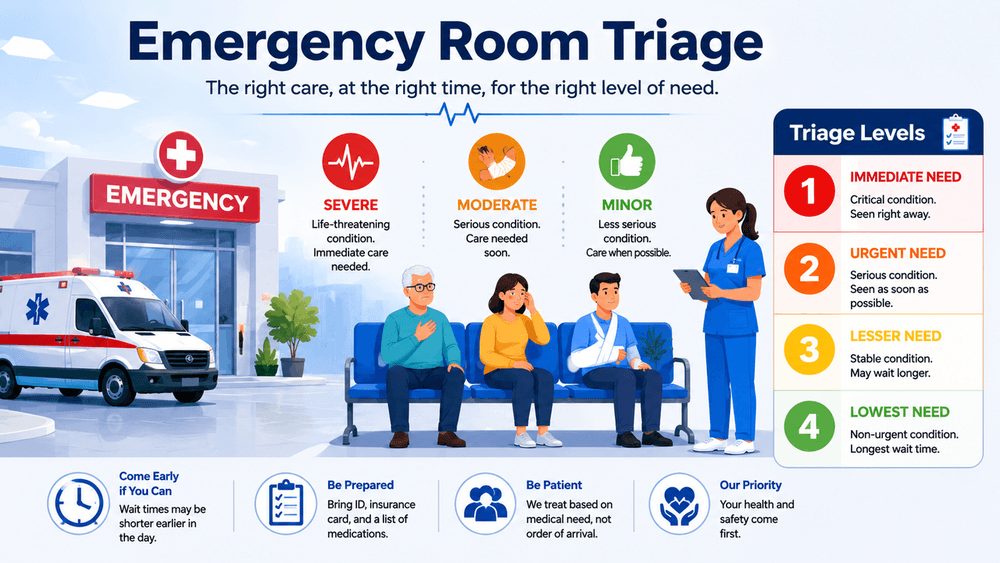
Emergency Room Triage: How It Works & What to Expect (2026 Guide)
Emergency room triage is the rapid sorting process that decides who gets care first the moment you arrive at the ER. It is the reason a patient who walks in after you can be taken back before you, and why a painful injury sometimes waits while a quieter-looking emergency goes straight through the doors. This guide explains how triage works, how the 5-level Emergency Severity Index (ESI) assigns priority, what happens during your assessment, and how long each level typically waits.
Key Takeaways
- Triage sorts patients by medical urgency, not arrival time, so the sickest patients are seen first.
- Nearly all US emergency departments use the 5-level Emergency Severity Index (ESI), from Level 1 (resuscitation) to Level 5 (non-urgent).
- A triage nurse assesses your vital signs, chief complaint, and likely resource needs in just 3 to 5 minutes.
- Wait times rise with each ESI level, from immediate at Level 1 to 2-4+ hours at Level 5.
- If your symptoms worsen while waiting, tell staff right away. Your ESI level can be escalated.
What Is Emergency Room Triage?
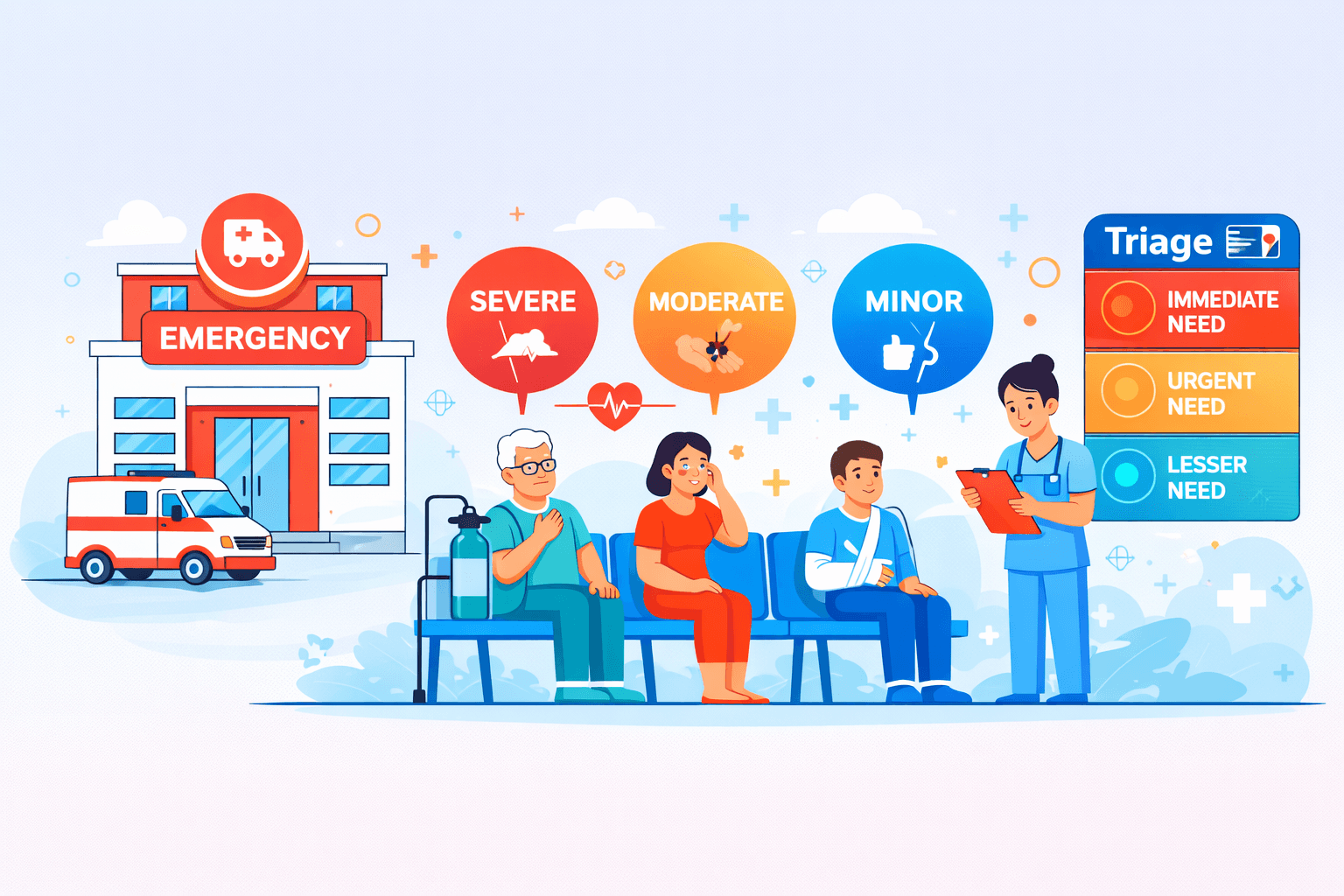
Illustration of an emergency department waiting area with patients sorted as severe, moderate and minor, beside a triage board marked immediate need, urgent need and lesser need
Picture a woman who had been sitting in the ER waiting room for two hours. Two hours with an ankle so swollen she could barely walk. She had signed in at 3:47 PM, gotten her vital signs checked five minutes later, and then nothing. Just chairs bolted to the floor and a TV nobody was watching.
Then, at 5:52 PM, a man walked through the sliding doors. Mid-fifties, clutching his chest, face pale and sweaty. The receptionist barely glanced at her clipboard before waving him through. A nurse appeared within seconds. The double doors swung open, and he was gone, disappeared into the treatment area before she could process what she had just witnessed.
"Are you kidding me?" she muttered to her husband. "I have been here for two hours with a broken ankle, and that guy just walked in."
Fifteen minutes later, another patient arrived. Nosebleed. Looked minor. Also went straight back.
She was furious. Her husband was drafting a complaint email in his head. Neither of them understood what had just happened. Neither realized that emergency room triage had just done exactly what it was designed to do, and quite possibly saved that man's life.
Here is what she did not know: that man with chest pain was having a heart attack. His blood pressure was 180/110. His heart rate was 115. The triage nurse recognized the signs in less than thirty seconds (crushing chest pressure, diaphoresis, elevated vital signs) and assigned him ESI Level 2. Within ten minutes, he had an EKG. Within twenty, he was in the cardiac catheterization lab where doctors opened a blocked artery before permanent heart damage occurred.
The nosebleed patient? He was on blood thinners for a mechanical heart valve. His blood pressure had spiked to dangerous levels. What looked like a simple nosebleed was actually a medical emergency that could have progressed to a brain hemorrhage.
And the woman with the swollen ankle? Her triage assessment showed stable vital signs, normal circulation to her foot, and a probable ankle sprain. ESI Level 3. Painful, yes. Urgent enough to need an X-ray and evaluation today, absolutely. But medically stable enough to wait while doctors handled actual life-or-death emergencies.
This is emergency room triage. Not a perfect system. Not always a fair-feeling system. But a system specifically designed to ensure the sickest patients get care first, even if that means someone with a genuinely painful injury has to wait.
Triage comes from the French verb "trier," meaning "to sort." During the Napoleonic Wars, battlefield surgeons faced an impossible situation: more wounded soldiers than they could possibly treat. They had to make brutal decisions about who got care first. The system they developed prioritized based on who would die without immediate intervention, who could wait, and who was beyond saving. Modern emergency medicine borrowed that framework and refined it into something more humane but built on the same principle: medical urgency determines priority, not arrival time.
Every emergency department in America uses some form of triage. Walk through those automatic doors, and before you see a doctor, before you even get a treatment room, a specialized triage nurse will assess you. That assessment typically takes three to five minutes. Three minutes to determine whether you need immediate resuscitation, urgent care, or can wait safely while more critical patients get treated.
The alternative to triage? First-come, first-served. It sounds fair until you realize it would kill people. A heart attack patient arriving five minutes after someone with poison ivy would wait in line behind them. Stroke victims would sit in waiting rooms while their brain cells died by the thousands each minute. Trauma patients bleeding internally would politely wait their turn. That is not healthcare. That is Russian roulette with human lives.
Before you head to the ER, check current wait times at emergency rooms near you. Different hospitals have different patient volumes at different times. One ER might have a 45-minute wait while another across town shows three hours. Making an informed choice about where to go, especially for non-life-threatening issues, can save significant time.
Helpful analogy: Think of triage like airport security screening. TSA PreCheck passengers bypass the regular line not because they are more important, but because they are pre-approved as lower risk. Similarly, ESI Level 1 and 2 patients bypass the waiting room not because their suffering matters more, but because their conditions could deteriorate or kill them within minutes to hours without intervention. The system sorts people into appropriate pathways based on objective criteria, not subjective judgments about whose problem matters most.
The Emergency Severity Index: How Triage Nurses Assess Patients
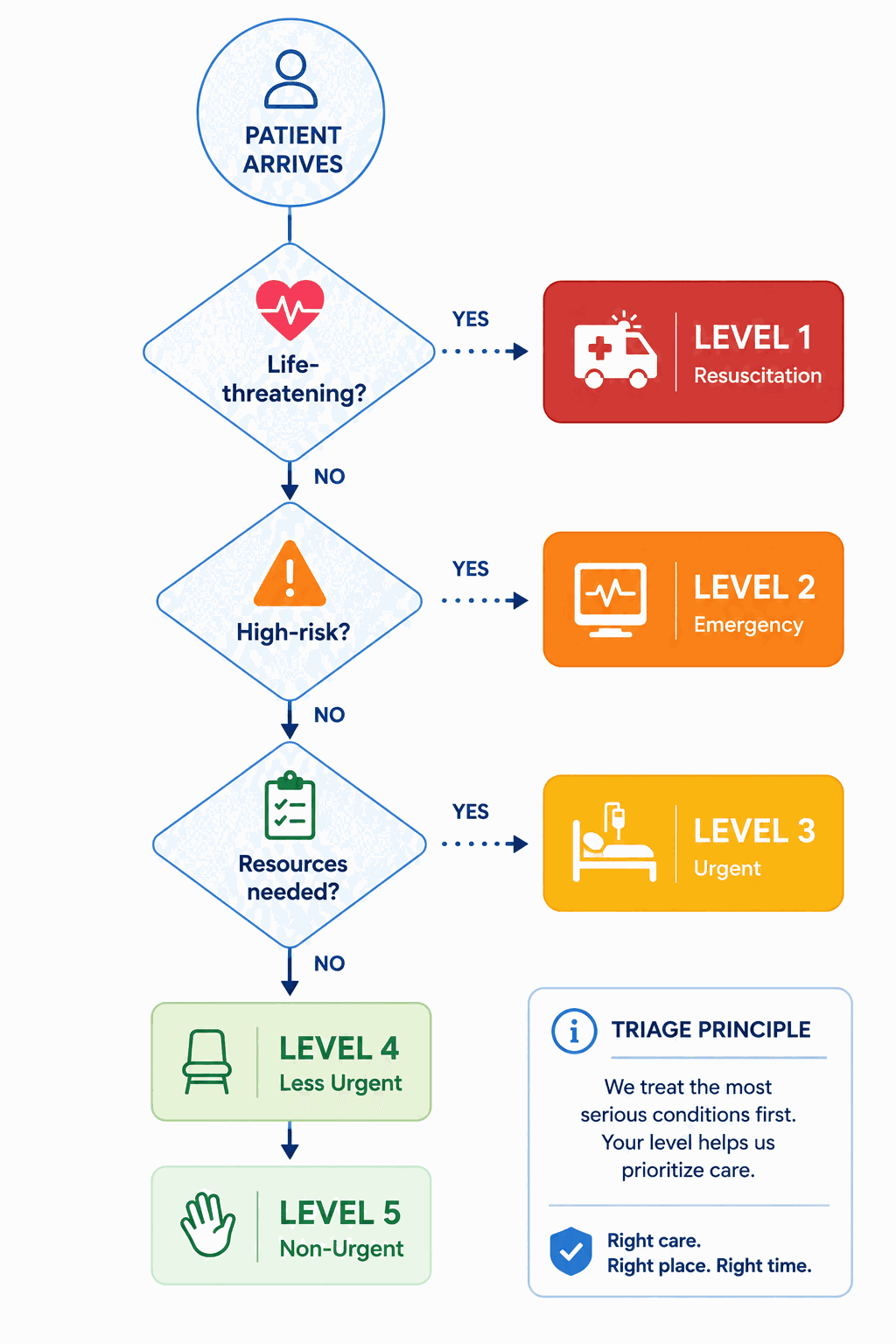
Triage decision flow from patient arrival: life threatening goes to level 1 resuscitation, high risk to level 2 emergency, then resource needs determine level 3 urgent, level 4 less urgent or level 5 non-urgent
The Emergency Severity Index, or ESI, is the standardized triage tool used in the large majority of US emergency departments (Emergency Nurses Association). It is not a gut-feeling system. It is not based on who is crying loudest or who has been waiting longest. It is an evidence-based algorithm developed by AHRQ and validated through millions of ER visits over two decades.
Here is how it works. The triage nurse asks three sequential questions.
Question 1: Does this patient require immediate life-saving intervention?
If yes (cardiac arrest, not breathing, unresponsive, massive uncontrolled bleeding), you are ESI Level 1. You go immediately to a resuscitation bay. Registration paperwork happens later. Someone starts CPR, manages your airway, stops the bleeding. Everything else waits.
Only 2-3% of ER patients meet Level 1 criteria. When you do, the entire ER mobilizes. It is called a "code" or a "trauma activation." Ten to fifteen staff members converge on one patient. It is controlled chaos focused on keeping you alive through the next few minutes.
Question 2: Is this a high-risk situation where the patient could deteriorate quickly?
If yes (chest pain suggesting heart attack, stroke symptoms, difficulty breathing, severe bleeding, altered mental status), you are ESI Level 2. You still bypass the waiting room or get pulled back very quickly. These are time-sensitive emergencies where minutes matter. Fifteen minutes could be the difference between full recovery and permanent disability. Between life and death.
Level 2 patients represent about 17-20% of ER visits. They should see a physician within 15 minutes, and most facilities achieve under 10 minutes for 75% of these patients (CDC National Hospital Ambulatory Medical Care Survey, 2026).
Question 3 (for stable patients): How many hospital resources will this patient need?
If you do not need immediate resuscitation and you are not high-risk, the triage nurse predicts resource utilization. This is where ESI gets interesting. "Resources" include lab tests, imaging studies, IV medications, specialist consultations, and complex procedures.
- Two or more resources = ESI Level 3 (Urgent)
- One resource = ESI Level 4 (Less Urgent)
- Zero resources = ESI Level 5 (Non-Urgent)
A broken arm needs an X-ray plus probably orthopedic consultation. That is two resources, Level 3. A small cut needing only cleaning and bandaging? Zero significant resources, Level 5. A urinary tract infection needing just a urine test and antibiotic prescription? One resource, Level 4.
The ESI works because it combines urgency with resource prediction. Emergency physicians who train staff on the system explain that triage is not just about how sick a person is right now. It is about how sick they are, how fast they could get sicker, and what the ER will need to do for them. That third piece, the resource prediction, helps staff plan. A Level 3 patient is going to need a bed with IV access, lab capabilities, and imaging. A Level 5 patient could be seen in a hallway or fast-track area.
The Emergency Nurses Association has validated ESI through multiple studies. It consistently predicts hospital admission rates, ICU needs, and length of stay. A Level 1 patient has an 85% chance of hospital admission. Level 2 runs about 40-50%. Level 5 patients get admitted less than 5% of the time (Emergency Nurses Association, 2025). The system works because it is based on objective medical criteria refined over decades of emergency care.
The Five Levels of Emergency Triage
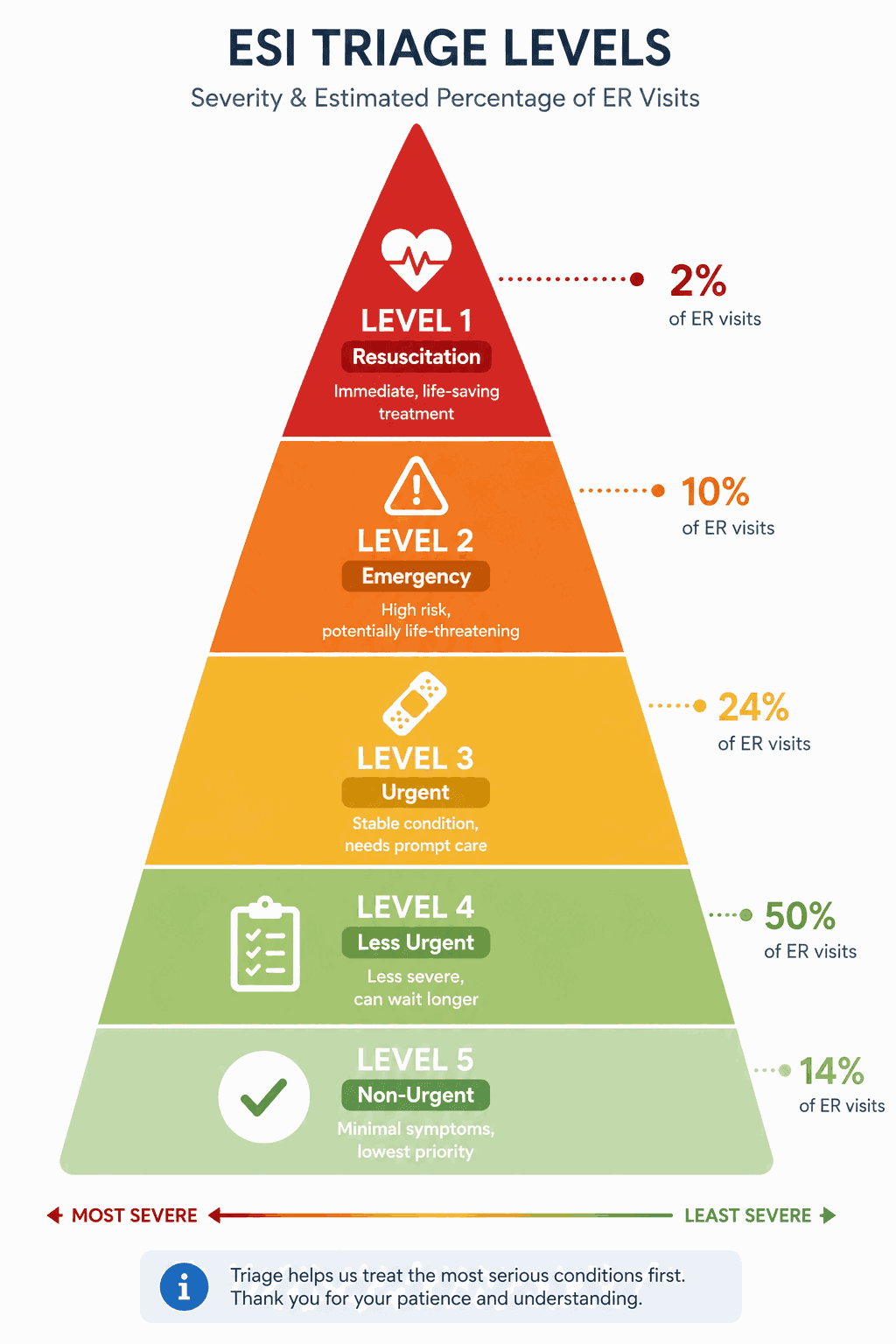
ESI triage levels by share of ER visits: level 1 resuscitation 2 percent, level 2 emergency 10 percent, level 3 urgent 50 percent, level 4 less urgent 24 percent and level 5 non-urgent 14 percent
Level 1: Resuscitation (Immediate)
You are dying. Right now. Without intervention in the next few minutes, you will die.
Cardiac arrest, your heart has stopped. Respiratory arrest, you are not breathing. Unresponsive with no pulse. Massive bleeding that will not stop even with direct pressure. Severe trauma from a high-speed motor vehicle accident or gunshot wound. Complete airway obstruction.
These patients go immediately to resuscitation bays. No waiting room. No paperwork. Someone is doing chest compressions while someone else establishes an airway while someone else starts IV access while someone else calls for blood products. It is synchronized emergency medicine at its most intense.
Level 1 patients represent only 2.3% of all ER visits, but they consume massive resources. These cases often involve multiple physicians (ER doctors, trauma surgeons, anesthesiologists) plus six to ten nurses and techs, all focused on one person.
If you are conscious enough to be reading this article and wondering what triage level you would get, you are not Level 1. Level 1 patients typically arrive by ambulance with paramedics already performing life-saving interventions.
Level 2: Emergent (Life-Threatening)
You are not dying this instant, but you could be soon. Or you are having a time-sensitive emergency where delays cause permanent damage.
Chest pain or pressure suggesting a heart attack. Stroke symptoms such as facial drooping, arm weakness, and slurred speech. Severe difficulty breathing. Heavy bleeding that is controlled but significant. Altered mental status: confused, disoriented, unresponsive to questions. Severe pain rated 9-10 out of 10 combined with concerning symptoms. Signs of sepsis: infection with abnormal vital signs.
These patients make up 17-20% of ER visits. They should see a physician within 0-15 minutes, and most facilities hit that target for three-quarters of Level 2 patients. Staff monitor these patients continuously while they wait. Any sign of deterioration triggers immediate escalation to Level 1.
Triage nurses explain that Level 2 is where a lot of time-sensitive conditions show up. Chest pain does not wait around to see if it is a heart attack or indigestion. Staff have to get you back there, get an EKG, and start the cardiac workup. The same is true with stroke. There is a window, about four and a half hours, where clot-busting drugs can work. After that, the window closes and brain damage is permanent. So when someone comes in with facial droop and cannot lift their left arm, they go back immediately, even if there are ten people ahead of them.
Recognizing the symptoms that require Level 2 triage could save your life or the life of someone you love. Crushing chest pressure, sudden severe headache ("worst headache of my life"), one-sided weakness or numbness, difficulty speaking, confusion, or gasping for air all warrant immediate ER evaluation.
Level 3: Urgent (Serious but Stable)
You need care today. Your condition is genuinely urgent and requires ER-level resources. But you are stable enough to wait safely while Level 1 and 2 emergencies get handled.
Broken bones and fractures. Deep lacerations needing stitches. High fever over 102 degrees F with other concerning symptoms. Severe abdominal pain. Moderate asthma attack. Kidney stones. Moderate bleeding that is controlled. Severe headache without red flags for stroke or bleeding. Deep puncture wounds. Second-degree burns over a significant body area.
This is the largest group: 42% of all ER patients land in Level 3. Wait times range from 30 minutes to two hours depending on facility volume and how many higher-priority cases arrive while you are waiting. If the ER stays steady and no ambulances bring critical patients, you might see a doctor in 45 minutes. If three trauma cases arrive from a multi-car accident, your wait extends.
Here is what matters: Level 3 means you are stable. Your broken ankle hurts like hell, no doubt about it. But it will not kill you in the next hour. It will not cause permanent damage if treatment gets delayed 90 minutes instead of 30. The triage nurse is not minimizing your pain. She is recognizing that your body can handle waiting while someone else's body cannot.
Level 3 patients need two or more hospital resources. That broken ankle requires an X-ray and likely orthopedic consultation. Severe abdominal pain needs lab work, imaging, and possibly surgical consultation. The resource prediction helps ER staff plan bed assignments efficiently.
Level 4: Less Urgent (Minor Issues)
Your condition needs medical evaluation but poses minimal immediate risk. These are problems that could potentially be handled at urgent care but are appropriate for ER evaluation.
Sprains and strains. Minor fractures of fingers or toes. Ear infections. Urinary tract infections. Minor burns covering small areas. Moderate pain without red flags. Animal bites with minimal bleeding. Mild asthma symptoms. Minor allergic reactions. Back pain without neurological symptoms.
About 28-30% of ER patients get triaged Level 4. Average wait times hover around 90 minutes, with ranges from one to three hours common during peak periods. These patients typically need one diagnostic test or procedure: a single X-ray, one straightforward lab test, or basic wound care.
This system can feel frustrating when you are the one waiting. Sitting in that waiting room for two hours with a painful wrist sprain while watching others come and go is genuinely hard. Your pain is real. Your frustration is valid. But from a medical standpoint, you are stable. Your condition is not deteriorating. You are not at risk of sudden complications.
Many Level 4 conditions would actually get faster, cheaper treatment at urgent care facilities. ERs are designed for emergencies and must prioritize accordingly. Urgent care centers run on a much closer-to-first-come-first-served model because everyone there is relatively stable.
Level 5: Non-Urgent (Could Wait)
Your issue does not require emergency resources at all. It would be better addressed by a primary care physician, urgent care, or a retail clinic.
Common cold symptoms. Sore throat without difficulty breathing. Minor cuts and scrapes. Small rashes. Medication refills. Chronic condition follow-up. Minor dental pain. Constipation. Minor skin infections. Non-urgent prescription requests.
Only 5-10% of ER patients receive Level 5 triage because most people recognize these issues do not need emergency care. Those who do come anyway face wait times of 2-4+ hours, sometimes longer. During peak times, Level 5 patients may wait so long they eventually leave without being seen.
Level 5 is the ER equivalent of using a sledgehammer to hang a picture frame. It will work eventually, but there is a better tool for the job, and you will wait a long time for someone to bring you that sledgehammer when they are busy using it for actual demolition work.
Level 5 patients need zero hospital resources beyond basic examination. Treatment typically involves reassurance, over-the-counter medication recommendations, or referrals to primary care. Total ER visit time often exceeds three hours for issues that could be handled in 20 minutes elsewhere.
If you are Level 5 and choosing to stay, understand you are waiting because everyone ahead of you has a more urgent medical need. The staff is not ignoring you. They are triaging appropriately. You are safe to wait, and that is actually good news about your condition, even if it does not feel like it.
The Five ESI Triage Levels
| ESI Level | Urgency Category | Definition | Examples | Typical Wait Time | % of Patients | What Happens |
|---|---|---|---|---|---|---|
| Level 1 | Resuscitation | Requires immediate life-saving intervention | Cardiac arrest, not breathing, unresponsive, massive uncontrolled bleeding, severe trauma | Immediate (0 minutes) | 2-3% | Straight to resuscitation bay, full team response, registration happens later |
| Level 2 | Emergent | High-risk situation, potential for rapid deterioration | Chest pain, stroke symptoms, severe difficulty breathing, altered mental status, severe bleeding, signs of sepsis | 0-15 minutes (median under 10 min) | 17-20% | Bypass or quick exit from waiting room, continuous monitoring, immediate physician evaluation |
| Level 3 | Urgent | Stable but needs prompt care, requires 2+ resources | Broken bones, deep cuts needing stitches, high fever, severe abdominal pain, kidney stones, moderate asthma | 30 minutes to 2 hours (median ~45 min) | 40-45% | Wait in waiting room or hallway, bed assigned when available, multiple tests or procedures needed |
| Level 4 | Less Urgent | Stable with low risk, requires 1 resource | Minor fractures, sprains, ear infections, UTIs, minor burns, moderate pain without red flags | 1-3 hours (median ~90 min) | 25-30% | Extended wait likely, one diagnostic test or simple procedure, could be seen in fast-track area |
| Level 5 | Non-Urgent | Completely stable, no significant resources needed | Cold or flu symptoms, minor rashes, sore throat, medication refills, chronic issues, minor cuts | 2-4+ hours | 5-10% | Longest waits, often encouraged to consider urgent care instead, basic exam only |
What Happens During Your Triage Assessment
Registration happens first at most facilities. You approach a desk, provide photo identification and insurance cards, and answer basic demographic questions. Name, date of birth, address, emergency contact, insurance information. This takes 2-5 minutes if you have everything ready. Some busy ERs skip registration initially and triage you immediately if you appear distressed, and paperwork catches up later.
Within 5-10 minutes of arrival, a triage nurse calls your name. You follow her to a triage area, sometimes a small private room, sometimes just a desk with a privacy partition in a corner of the waiting room. The assessment begins immediately.
Vital signs (1-2 minutes): The nurse wraps a blood pressure cuff around your arm, clips a pulse oximeter on your finger, places a thermometer under your tongue or in your ear, and counts your respiratory rate. She is recording objective data: blood pressure, heart rate, oxygen saturation, temperature, respiratory rate. These numbers reveal your body's physiological state independent of what you tell her.
Chief complaint (1-2 minutes): "What brought you to the ER today?" State your primary concern clearly and concisely. "I am having chest pressure that started an hour ago" works perfectly. Save the detailed narrative for later. The triage nurse needs to know your main problem right now.
Targeted questions (1-2 minutes): She asks about critical information. Are you on blood thinners? Any medication allergies? Are you pregnant? Recent surgeries? Major medical conditions like diabetes or heart disease? These questions identify risks and complications that affect your care.
Pain assessment (30-60 seconds): "On a scale of zero to ten, with zero being no pain and ten being the worst pain imaginable, how would you rate your pain?" She asks where it hurts, what it feels like (sharp, dull, burning, pressure), when it started, and what makes it better or worse.
Three to five minutes. That is it. The entire triage assessment takes three to five minutes for most patients. Complex presentations might require seven or eight minutes. But the process moves quickly because it is designed to answer one specific question: How urgently does this person need medical evaluation?
ER triage nurses note that people sometimes get frustrated because they think triage is where they tell their whole story and get diagnosed. But that is not what it is. A triage nurse has maybe three or four minutes max to figure out if you are about to die, if you could die soon, or if you are stable. That is literally it. The detailed history, the full exam, the diagnosis all come later with your nurse and the doctor. The triage nurse's job is rapid risk stratification: sending you straight back, or determining you can wait safely.
The triage nurse does not diagnose your condition. She assesses urgency. She assigns your ESI level. She documents her findings. Then you return to the waiting room (Levels 3-5) or move immediately to a treatment area (Levels 1-2).
Triage Nurse Insight During those three minutes, a triage nurse runs through a mental checklist at lightning speed. ABCs first: airway, breathing, circulation. Is this patient going to code? Then high-risk conditions: chest pain, stroke, sepsis. Then resource needs. After thousands of these assessments, nurses know what matters and what can wait. Your detailed medical history from 1987 can wait. The fact that you are on Coumadin and having a nosebleed cannot wait.
Why Someone Who Arrived After You Gets Seen First
This moment. This is where the system feels most unfair.
You have been waiting 90 minutes. Your pain is real. Your frustration is building. You watch the automatic doors slide open. Someone walks in. Five minutes later, they disappear through those treatment room doors while you are still sitting in the same plastic chair you have been warming for an hour and a half.
It feels wrong. It feels like you are being ignored, like your problem does not matter, like the system is broken.
Here is the truth: sitting in that waiting room while others go ahead of you is genuinely difficult. Your pain does not hurt less because someone else's condition is more critical. Your frustration does not evaporate when you learn there is a medical reason for the wait. This system can feel cruel when you are the one experiencing it.
But here is what is happening behind those doors.
Medical urgency determines treatment order. Not arrival time. Not who is complaining loudest. Not how much pain you report. Medical urgency means which conditions will deteriorate rapidly without intervention, which patients face time-sensitive emergencies, and which situations could result in death or permanent disability if delayed.
That person who just walked in with chest pain? Their heart might be actively dying right now. Every minute of delayed treatment means more heart muscle dies. The emergency room staff cannot take a chance that it is "just indigestion." Chest pain requires immediate evaluation because the consequences of missing a heart attack are catastrophic.
Someone exhibiting stroke symptoms, such as facial drooping, one-sided weakness, and slurred speech, has a narrow window for treatment. Clot-busting medication works best within 90 minutes of symptom onset and loses effectiveness after 4.5 hours. Brain cells die by the thousands every minute during a stroke. Your sprained ankle, while genuinely painful, will not cause permanent brain damage if treatment gets delayed another hour.
A patient on blood thinners with what looks like a simple nosebleed might be experiencing a medical emergency. Blood thinners prevent clotting, so that minor nosebleed could be the visible sign of internal bleeding, brain hemorrhage, or dangerously altered coagulation. The triage nurse knows this. You probably do not.
Children with high fevers and lethargy get escalated because pediatric conditions deteriorate frighteningly fast. A toddler who seems mildly ill can crash into septic shock within an hour or two. The margin for error with sick children is razor-thin, so they often get prioritized even when adult patients with seemingly similar symptoms wait longer. If you are unsure about a child's symptoms, our guide on when to take your child to the ER explains the warning signs that need emergency care.
The triage nurse who assessed you made a medical determination: your condition is stable enough to wait safely. That is actually good news. It means you are not in immediate danger. The person who just got called back could not wait safely. Their body was showing signs that minutes matter.
Triage nurses often say the hardest part of triage is not the medical assessment. It is watching people's faces when someone who arrived after them goes back first. The frustration is understandable. Anyone sitting in pain for two hours who watched someone walk in and get seen immediately would be upset too. But staff cannot explain in that moment that the other person's oxygen saturation is 88% and they are working hard to breathe. HIPAA will not let them share that. So patients just see someone cutting the line, when really the nurse is trying to prevent someone from crashing right there in the waiting room.
How Long You Wait Based on Your Triage Level
Wait time varies dramatically by ESI level. Here is what to expect.
Level 1: Zero minutes. Immediate transfer to resuscitation bay. Full team response mobilizes within 60 seconds.
Level 2: 0-15 minutes. Median wait time under 10 minutes at most facilities. Some Level 2 patients bypass the waiting room entirely. Others get pulled back within minutes of triage. Staff monitor continuously and escalate immediately if condition worsens.
Level 3: 30 minutes to 2 hours. Median wait around 45 minutes nationally, but wide variation depending on facility and time of day. Your wait extends if Level 1 or 2 emergencies arrive while you are waiting. You are stable, so you can wait safely even if it is uncomfortable.
Level 4: 1-3 hours. Median wait approximately 90 minutes. These patients are completely stable with minor issues. Many facilities route Level 4 patients to "fast track" areas where physician assistants or nurse practitioners handle straightforward cases more quickly.
Level 5: 2-4+ hours. Longest waits. Some Level 5 patients wait so long they leave without being seen, which often indicates they should have chosen urgent care instead of the ER.
But here is what matters more than these numbers: your individual wait depends on what is happening in that ER right now. Wait times are not appointments. They are estimates based on current conditions.
If you arrive at 2 PM and get triaged Level 3 with an estimated 45-minute wait, that estimate assumes current ER volume stays constant. If three ambulances arrive at 2:15 PM bringing trauma patients from a highway accident, your wait time just tripled. If the ER has a quiet afternoon with no new emergencies, you might get called back in 30 minutes instead of 45.
Check real-time ER wait times at hospitals near you before leaving home. Different facilities have different volumes at different times. One hospital might show a 45-minute wait while another five miles away has a three-hour wait. Making an informed choice, especially for non-life-threatening conditions, can save you significant time.
Check ER wait times before you go Wait times vary dramatically by hospital and time of day. One ER might have a 45-minute wait while another across town shows 3 hours. See real-time wait times at nearby emergency rooms. Current wait times are updated every 15-30 minutes and show:
- Average wait to see a provider
- Current patient volume
- Historical patterns by time of day
- Driving directions to each facility
Smart ER strategy: Check wait times at 2-3 nearby hospitals before choosing where to go. For non-life-threatening issues (ESI Level 3-5), choosing a less crowded ER can cut your total visit time by hours.
Note: For life-threatening emergencies (chest pain, stroke symptoms, severe bleeding, difficulty breathing), go to the nearest ER or call 911 immediately. Do not delay care to compare wait times.
Total ER visit time differs from wait-to-see-doctor time. Even if you see a physician quickly, you will then wait for test results, specialist consultations, and treatment. A Level 2 patient might see the doctor in 8 minutes but spend 3-4 hours total in the ER for cardiac workup and observation. A Level 3 patient might wait 90 minutes to see the doctor, then spend another 90 minutes waiting for X-rays and results.
Understanding typical ER wait time patterns helps set realistic expectations. Weekday evenings (4-10 PM) and weekends are busiest. Early morning hours (5-8 AM) often have the shortest waits. Mondays tend to be busier than mid-week days as weekend conditions worsen. Flu season, heat waves, and holidays all impact ER volume.
Staff continuously monitor waiting patients. Level 2 patients get reassessed every 15-30 minutes. Level 3 patients every 30-60 minutes. Level 4-5 patients every 60-120 minutes. Any patient waiting over 2 hours gets a mandatory reassessment regardless of level. If your condition worsens while waiting, notify staff immediately. Your triage level can be escalated, moving you up in priority.
What Triage Nurses Look For: Red Flags and Vital Signs
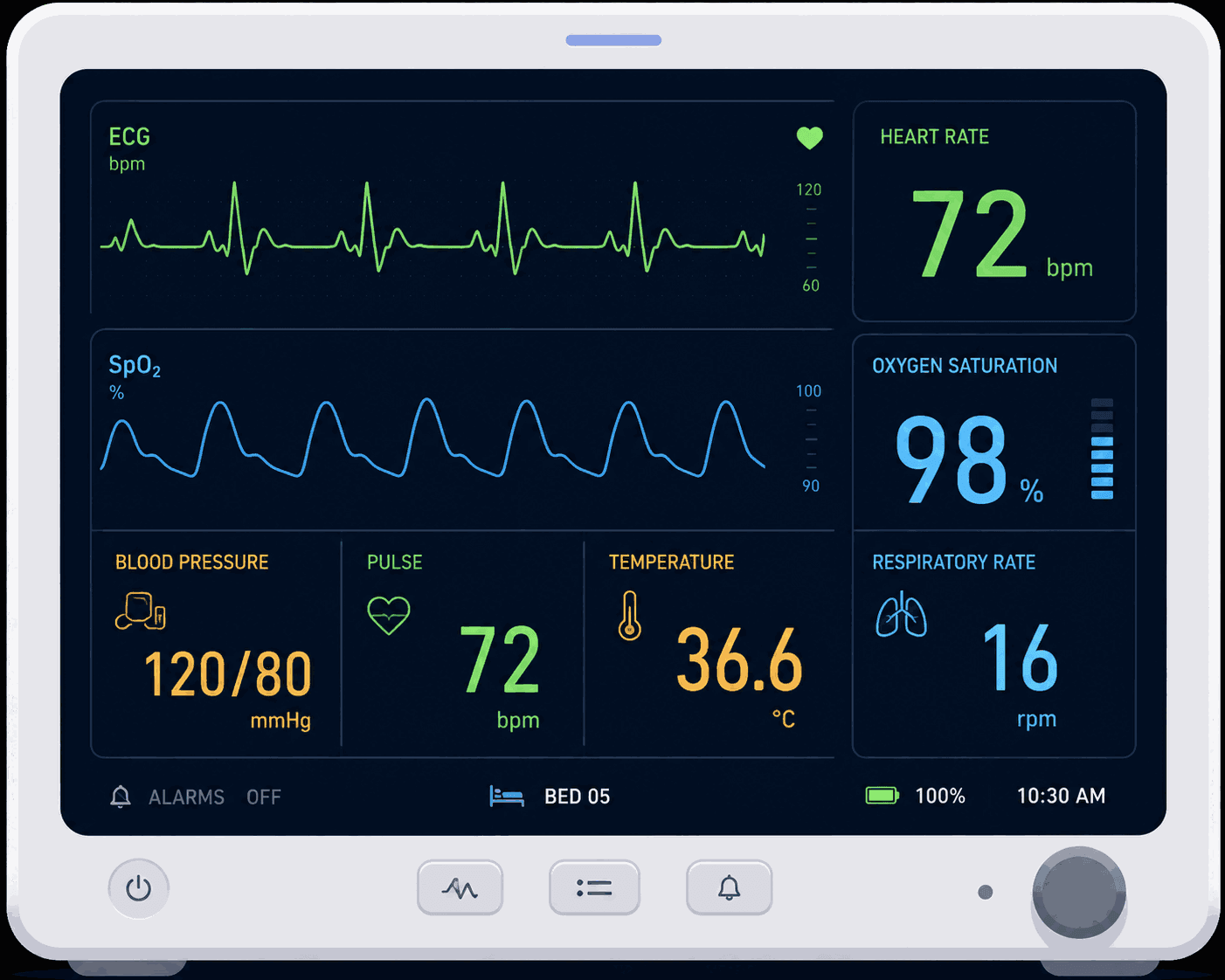
Patient monitor showing the vital signs recorded at triage: blood pressure 120 over 80, pulse 72, temperature 36.6 Celsius, oxygen saturation 98 percent and respiratory rate 16
Triage nurses assess multiple factors simultaneously, building a rapid mental picture of your medical stability and urgency. They are looking for specific red flags, the objective indicators that trigger immediate concern regardless of your subjective complaints.
Vital Signs That Trigger Immediate Escalation
Heart rate: Normal range runs 60-100 beats per minute. Bradycardia under 50 bpm or tachycardia over 120 bpm raises immediate concern. A heart rate of 145 in an adult with chest discomfort screams cardiac emergency. A heart rate of 40 in someone not on beta blockers suggests heart block or dangerous rhythm abnormality.
Blood pressure: Extremes in either direction trigger alerts. Hypotension with systolic pressure below 90 mmHg indicates potential shock, meaning your body is not perfusing organs adequately. Hypertensive crisis with readings over 180/120 mmHg risks stroke, heart attack, or organ damage. Either extreme escalates your triage priority immediately.
Oxygen saturation: Normal O2 sat runs 95-100% on room air. Readings below 92% mean inadequate oxygen reaching your tissues. Someone walking in with 88% saturation gets immediate attention regardless of their chief complaint. Readings in the low 80s or below indicate severe respiratory compromise requiring urgent intervention.
Respiratory rate: Normal breathing runs 12-20 breaths per minute. Rates below 10 suggest respiratory depression from drugs, overdose, or neurological issues. Rates over 28 indicate respiratory distress, severe pain, metabolic crisis, or sepsis. A triage nurse counts your respirations for 15 seconds and multiplies by four, which takes 15 seconds but provides critical information.
Temperature: Fever over 103 degrees F (39.4 degrees C) with other symptoms or temperature below 95 degrees F (35 degrees C) both indicate serious infection or metabolic problems. Elderly patients with serious infections sometimes present with hypothermia rather than fever, and a triage nurse knows this pattern and adjusts accordingly.
As triage nurses put it, vital signs do not lie. You can say your pain is 2 out of 10 and that you are fine, but if your blood pressure is 82 over 50 and your heart rate is 130, something is very wrong. Or you can say your pain is 10 out of 10, the worst pain of your life, but if you are sitting there texting and laughing with a friend and your vitals are rock solid normal, a nurse weighs those things differently. The objective data, heart rate, blood pressure, oxygen level, reveals what is really happening inside your body.
Chief Complaint Assessment
How you describe your problem matters enormously. Certain phrases trigger immediate red flags for triage nurses:
- "Worst headache of my life": possible brain hemorrhage, immediate evaluation
- "Crushing chest pressure" or "elephant sitting on my chest": cardiac emergency
- "Tearing pain in my back": possible aortic dissection, life-threatening
- "Can't catch my breath": respiratory emergency
- "One side of my face feels droopy": stroke alert
- "Sudden vision loss": emergency needing immediate ophthalmology
Time-sensitive complaints get immediate attention. Chest pain, stroke symptoms, and severe allergic reactions all have narrow treatment windows where minutes determine outcomes. The triage nurse does not diagnose whether you are actually having a heart attack. She identifies that you might be, which requires immediate evaluation.
Trauma mechanism affects triage dramatically. "I fell from a ladder" requires a vastly different assessment than "I tripped on the sidewalk." High-speed motor vehicle accidents, falls from over six feet, penetrating trauma (stabbings, gunshots), and crush injuries all escalate triage levels regardless of current appearance. Internal injuries may not be immediately visible, but mechanism predicts potential damage.
Resource Needs Prediction
For stable patients (ESI 3-5), predicting resource utilization separates levels. This is where emergency department experience becomes crucial. The triage nurse mentally catalogs what tests and procedures you will likely need based on your presentation.
A swollen, painful ankle from a basketball injury? Probable X-ray needed, possible orthopedic consultation. That is two resources, ESI Level 3.
Suspected urinary tract infection with dysuria and frequency? Urinalysis and antibiotic prescription. One resource, ESI Level 4.
Minor cut on your finger needing only cleaning and bandaging? Zero significant resources beyond basic supplies, ESI Level 5.
Resources that count: laboratory tests (CBC, metabolic panel, cardiac enzymes, toxicology), imaging studies (X-rays, CT scans, ultrasounds, MRI), specialty consultations (orthopedics, surgery, cardiology), IV medications, and complex procedures.
Resources that do not count: simple wound cleaning, basic bandaging, taking vital signs, performing a straightforward physical examination, prescribing oral medications, and applying simple splints or slings.
Pain Assessment and Its Limitations
Pain scales help quantify subjective experience, but context matters more than the number itself.
A patient reporting 10/10 pain while sitting calmly scrolling through their phone gets assessed differently than someone writhing in pain, pale, sweating, and unable to speak in complete sentences despite reporting 7/10 pain. Triage nurses observe the whole picture: vital signs, appearance, behavior, and consistency between reported pain and observed distress.
Certain pain descriptions trigger immediate concern regardless of the numeric rating:
- "Worst pain of my life"
- "Like nothing I've ever felt before"
- "Feels like something tearing or ripping"
- "Sudden onset, like someone hit me"
- "Thunder-clap headache"
These phrases suggest catastrophic events: aortic dissection, ruptured aneurysm, brain hemorrhage, testicular torsion. Pattern recognition from thousands of patient encounters helps triage nurses identify genuinely dangerous presentations versus exaggerated complaints.
What Triage Nurses Assess
| Assessment Category | What Nurses Check | Why It Matters | Time Needed | Specific Examples |
|---|---|---|---|---|
| Life-Threatening ABCs | Airway patency, breathing adequacy, circulation/pulse | Identifies patients needing immediate resuscitation | 30-60 seconds | Not breathing, no pulse, severe respiratory distress, uncontrolled hemorrhage |
| Vital Signs | Blood pressure, heart rate, oxygen saturation, temperature, respiratory rate | Provides objective physiological data independent of patient report | 1-2 minutes | BP 85/50 (shock), HR 140 (tachycardia), O2 sat 87% (hypoxia), temp 104 degrees F (high fever), resp rate 32 (tachypnea) |
| Chief Complaint | Primary reason for visit, symptom onset, duration, changes | Determines if condition is time-sensitive emergency | 1-2 minutes | "Chest pressure for 30 minutes," "Sudden severe headache," "Can't move right arm," "Difficulty breathing" |
| Pain Assessment | Location, severity (0-10 scale), character (sharp/dull/burning), radiation, aggravating/relieving factors | High pain may indicate serious condition, but number alone does not determine priority | 30-60 seconds | "Crushing chest pain 9/10," "Tearing sensation in back 10/10," "Throbbing headache 7/10 with vision changes" |
| Medical History (Brief) | Current medications (especially blood thinners), known allergies, major medical conditions, recent surgeries/procedures | Identifies risk factors, complications, contraindications | 1-2 minutes | On warfarin (bleeding risk), diabetic (infection/DKA risk), recent cardiac stent (chest pain urgency), pregnant (medication/imaging restrictions) |
| Mental Status | Alertness, orientation (person/place/time), appropriate responses, behavior | Detects altered consciousness, neurological issues, psychiatric emergencies | 30 seconds | Confused about location, inappropriate responses, extremely agitated, unresponsive to questions |
From Triage to Treatment: The Complete ER Process
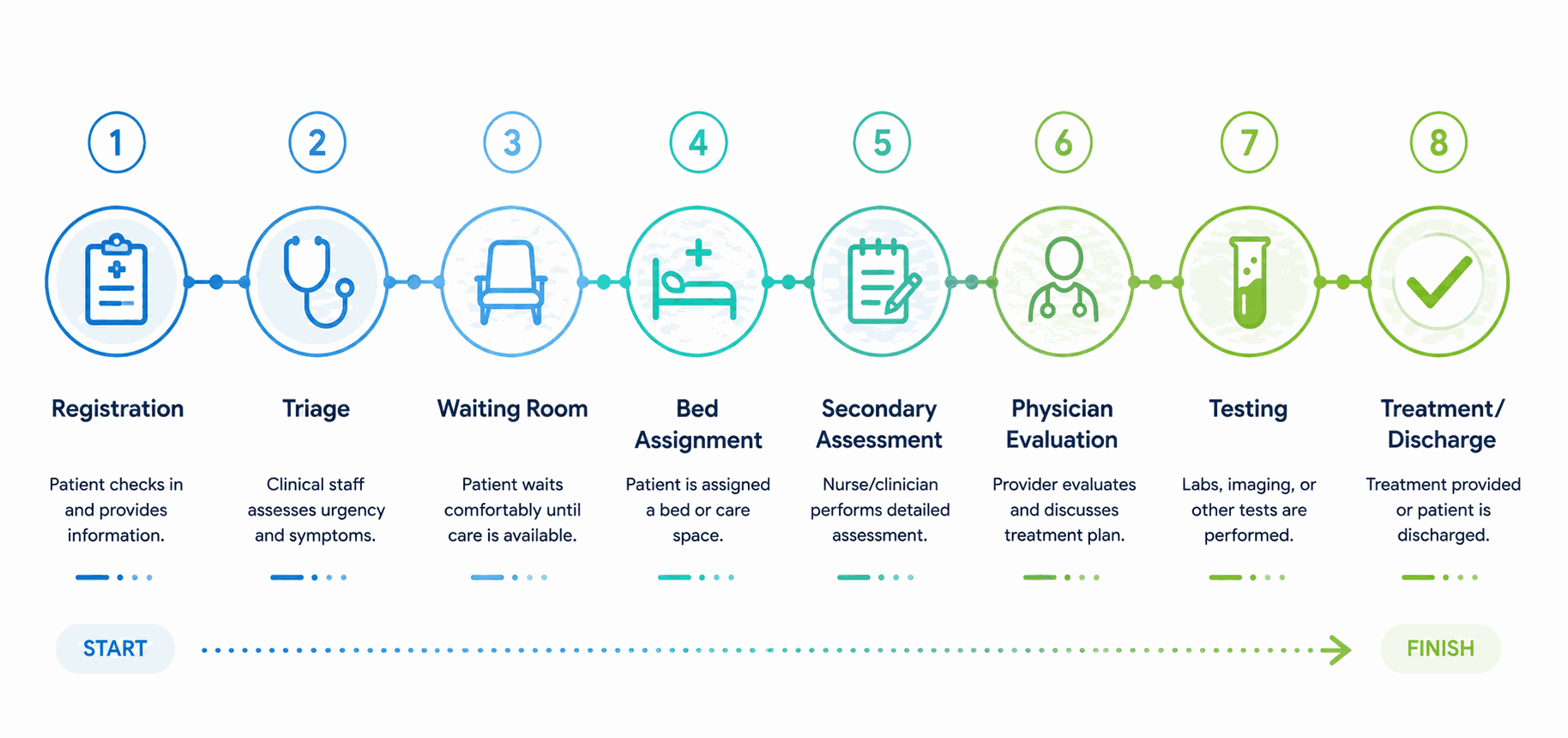
Eight steps of an ER visit: registration, triage, waiting room, bed assignment, secondary assessment, physician evaluation, testing, then treatment or discharge
Emergency room triage is just the first step in what happens in the emergency room. Understanding the complete process helps set realistic expectations about your entire visit.
Step 1: Registration and Check-In
You walk through the automatic doors and approach the registration desk. A clerk asks for photo ID and insurance cards. You provide basic demographic information: full name, date of birth, address, phone number, emergency contact, insurance details, and primary care physician.
Prepared patients complete this in 2-3 minutes. Fumbling through your wallet looking for your insurance card while ten people wait behind you extends registration to 5-7 minutes. Bringing essential documents such as your ID, insurance card, and medication list speeds this process significantly.
Some hospitals now offer mobile pre-registration through apps or websites. You complete forms at home, save them, and simply check in when you arrive. This innovation can shave 5-10 minutes off your visit.
Critical cases may bypass registration initially. If you walk in clutching your chest and looking pale, staff will triage you immediately and complete registration later. Nobody ever died from incomplete paperwork, but people have died from paperwork delays. ERs prioritize appropriately.
Step 2: Initial Triage Assessment
Within 5-10 minutes of registration, a triage nurse calls your name. This is the emergency room triage assessment covered in previous sections: vital signs, chief complaint, brief history, pain assessment, and ESI level assignment. Total time: 3-5 minutes for straightforward presentations.
The triage nurse documents everything in the electronic medical record. She assigns your ESI level based on the algorithm. She notes any red flags requiring immediate attention. She determines whether you bypass the waiting room or return there to wait for a bed.
Triage nurses emphasize that triage is not the exam. It is not where you get your diagnosis. It is not where the problem gets solved. It is rapid risk assessment built on three questions: Dying right now? High risk? How many resources? That is it. The detailed history, the physical exam, the workup all come next. But first staff have to know how fast you need it.
Step 3: Waiting Room or Direct to Treatment Area
Your ESI level determines what happens next.
ESI 1-2: You move immediately to a treatment area. No waiting room. Staff mobilize resources, assign a bed (usually in the main ER or resuscitation bay), and begin continuous monitoring. You might wait 5-15 minutes in a holding area while staff prepare, but you are under direct observation.
ESI 3-5: You return to the waiting room. Your name goes on a list ordered by ESI level, then by arrival time within each level. All Level 2s get called before any Level 3s. All Level 3s before any Level 4s. Within Level 3, earlier arrivals generally go first unless someone's condition changes.
The waiting room phase frustrates people most. You are just sitting there. Watching the clock. Wondering if they have forgotten about you. Watching others get called before you. It feels like nothing is happening, but actually, staff are monitoring waiting patients, preparing beds as they become available, and managing multiple simultaneous emergencies behind those closed doors.
Comparing wait times at nearby emergency rooms before arrival helps you choose the least crowded facility for non-critical issues. A hospital showing "3 hour wait" might have one trauma bay and two available beds. Another showing "45 minute wait" might have six empty beds. That difference turns a miserable evening into a tolerable one.
Step 4: Bed Assignment and Secondary Assessment
Your name gets called when a bed becomes available that matches your needs. A nurse or tech escorts you from the waiting room through those mysterious double doors into the treatment area.
You are assigned a room, sometimes fully private, sometimes a bed with curtains in a shared space. Many ERs now use hallway beds for stable patients due to overcrowding. You will change into a hospital gown and secure your belongings (or give valuables to family if possible).
A nurse performs a thorough secondary assessment. This is much more detailed than triage: complete medical history, all current medications with doses, full symptom timeline, comprehensive physical examination focused on your chief complaint, and review of systems. You can browse emergency rooms by state to compare facilities near you.
This assessment takes 10-20 minutes depending on complexity. The nurse establishes IV access if ordered, draws blood for laboratory tests, starts IV fluids if indicated, and begins implementing initial orders. She creates the official medical record that the physician will review.
You might wait another 15-90 minutes in your assigned bed before a doctor arrives. This is not neglect. It is triage again. The physician is managing multiple patients simultaneously, prioritizing based on acuity. If you are stable ESI Level 3, you might wait while the doctor handles a Level 2 in the next bay over.
Step 5: Physician Evaluation
The emergency physician finally arrives, having reviewed the triage assessment and nursing documentation. The physician asks additional questions, probing deeper into your symptoms, their onset, what makes them better or worse, and your relevant medical history.
The physician performs a focused physical examination based on your chief complaint. Chest pain gets a cardiac exam. Abdominal pain gets an abdominal exam. Head injury gets a neurological assessment. This evaluation typically lasts 10-30 minutes, though simple cases may take only 5-10 minutes.
Based on this examination, the doctor orders diagnostic tests: laboratory work, imaging studies, EKG, and consultations with specialists. The doctor explains the initial assessment, what conditions are under consideration (differential diagnosis), and what tests are being ordered to investigate further.
Then he leaves. And you wait.
Emergency physicians say this surprises people. Patients finally see the doctor, they are relieved, and then the doctor leaves and they ask where the physician is going. But the doctor is ordering tests and moving to the next patient while the lab and imaging do their work. A physician cannot stand at one bedside for 90 minutes waiting for CT results while managing eight other patients. The doctor returns when results are ready to discuss the plan.
Step 6: Testing, Treatment, and Disposition
Tests proceed according to hospital workflow and current volume. Lab technicians draw blood or collect urine samples. Transport staff wheel you to radiology for X-rays or CT scans. Sometimes portable equipment comes to your room for simpler studies.
Each test adds time. Blood work takes 45-90 minutes from draw to results. X-rays might be completed in 15 minutes but need radiologist interpretation (add another 20-40 minutes). CT scans require scheduling, transport, scan time, and radiologist reading, easily 60-90 minutes total. MRIs can take 2-3 hours.
Results trickle in gradually. The physician reviews each test as it completes. Lab work might show something requiring additional tests. Imaging might raise new questions. The diagnostic process is rarely linear. Each answer generates new questions.
Treatment begins once the diagnosis becomes clear. Medications, procedures, splinting, suturing, whatever your condition requires. Pain management often starts earlier in the process, but definitive treatment waits for diagnosis.
Disposition happens last. You are either admitted to the hospital or discharged home. Admitted patients wait for available inpatient beds. This can take hours during busy periods as admitted patients upstairs get discharged and rooms get cleaned. Discharged patients receive instructions, prescriptions, work notes, and follow-up appointments.
Total time from arrival to discharge? Highly variable. Simple cases might be 2-3 hours. Complex cases requiring multiple tests and specialist consultation can easily exceed 6-8 hours. Admitted patients sometimes spend 12+ hours in the ER waiting for an inpatient bed.
ER Process Timeline from Arrival to Treatment
| Step | What Happens | Typical Duration | What You Should Do | Notes |
|---|---|---|---|---|
| 1. Arrival & Registration | Provide name, demographics, insurance information to clerk | 2-5 minutes | Have ID and insurance card ready, list emergency contact | Can happen simultaneously with triage for critical patients |
| 2. Initial Triage Assessment | Brief medical evaluation: vital signs, chief complaint, ESI level assignment | 3-5 minutes | State chief complaint clearly, mention time-sensitive symptoms, disclose allergies and blood thinners | This determines your priority level, not a full exam or diagnosis |
| 3. Waiting Room (If Applicable) | Wait for bed assignment based on ESI level and availability | 15 minutes to 4+ hours (depends on triage level) | Stay in designated waiting area, notify staff immediately if symptoms worsen | ESI 1-2 bypass waiting room; ESI 3-5 wait times vary dramatically |
| 4. Bed Assignment | Moved to treatment area, change into gown, valuables secured | 5-15 minutes | Follow instructions, ask where to secure belongings | Getting a bed does not mean you will see a doctor immediately, still more waiting ahead |
| 5. Secondary Assessment | Detailed nursing evaluation: complete history, medications, full physical exam | 10-20 minutes | Provide complete medication list, full symptom timeline, entire medical history | Much more thorough than triage, this creates your official medical record |
| 6. Physician Evaluation | Doctor examines you, orders diagnostic tests, explains initial assessment | 10-30 minutes | Answer questions honestly, ask about the plan, request pain management if needed | Doctor will leave after exam to see other patients while awaiting your test results |
| 7. Diagnostic Testing | Blood work, imaging (X-rays, CT, ultrasound), EKG, consultations as ordered | 30 minutes to 2+ hours | Remain in assigned area unless instructed otherwise, be patient during processing time | Each test adds time; results are not instant; radiologists must interpret imaging |
| 8. Treatment & Disposition | Receive treatment/medications, decision to admit or discharge, final instructions | 30 minutes to several hours | Follow discharge instructions carefully, fill prescriptions immediately, schedule follow-up | Total ER visit: typically 2-6+ hours; complex cases or awaiting admission can exceed 8-12 hours |
How to Communicate Effectively During Triage
The way you communicate during your triage assessment significantly impacts how quickly and accurately the nurse assesses your urgency.
DO state your primary concern immediately and concisely. "I am having chest pain that started 45 minutes ago" gives the triage nurse essential information in six seconds. Do not bury the lead with "Well, I have been feeling tired lately, and yesterday I had a little indigestion, and this morning when I woke up..." Get to the point.
DO mention time-sensitive symptoms first. Chest pain, stroke symptoms, severe bleeding, difficulty breathing, and sudden severe headache go at the front of the conversation. These are the red flags that trigger immediate escalation. Do not make the nurse extract critical information through twenty questions.
DO disclose allergies and blood thinners immediately. "I am allergic to penicillin" and "I take warfarin" are safety-critical facts that affect your care immediately. Allergies prevent medication errors. Blood thinners change how injuries and bleeding get assessed. Tell the triage nurse before she asks.
DO describe pain specifically. "Crushing pressure in my chest radiating to my left arm" tells a much different story than "my chest hurts." Location, character (sharp, dull, burning, pressure), severity, what makes it better or worse, and when it started all matter. Specificity helps.
DO mention if symptoms are worsening. "The pain started at 6/10 two hours ago and now it is 9/10" indicates deterioration. "I have vomited three times in the last hour" suggests accelerating illness. Progressive symptoms elevate urgency.
DO be honest about drug use. Illicit drug use affects your care significantly. Cocaine causes chest pain that mimics heart attacks but requires completely different treatment. Opioid use affects pain management strategies. Triage nurses do not judge. They need accurate information to treat you safely. Whatever you tell them stays confidential.
DON'T recite your entire medical history during triage. Save the detailed history for your secondary nursing assessment. The triage nurse needs focused, urgent information, not your complete medical biography dating back to your 1987 appendectomy. That comes later.
DON'T exaggerate pain if you are visibly comfortable. Claiming 10/10 pain while calmly texting, laughing, eating snacks, and showing no distress damages your credibility. Triage nurses notice behavioral consistency. They have assessed thousands of patients. They know what genuine 10/10 pain looks like: writhing, unable to get comfortable, pale, sweating, unable to speak in full sentences. Exaggeration does not get you seen faster. It makes the nurse question everything else you are reporting.
DON'T withhold information about sensitive issues. Pregnancy, sexual activity, domestic violence, and suicide attempts all affect medical care. Confidentiality protects you. Accurate information helps you. The triage nurse is not there to judge your life choices. She is there to assess medical urgency and ensure appropriate treatment.
DON'T argue with the triage nurse about your ESI level or wait time. The triage nurse does not control bed availability. She did not create the triage system. She is implementing evidence-based protocols designed to save lives. Getting angry at her accomplishes nothing except making everyone's day worse. If your condition genuinely worsens while waiting, calmly notify staff for reassessment.
DON'T assume triage is where you get diagnosed. The triage nurse performs urgency assessment, not diagnosis. She determines how quickly you need medical evaluation, not what is causing your symptoms. Diagnosis comes later from the physician after complete history, examination, and diagnostic testing.
Learning how to communicate clearly with emergency room staff improves your entire ER experience. Clear, concise, honest communication helps medical staff assess and treat you accurately and quickly.
Myth-buster: Pain level and ER priority Myth: Saying my pain is 10/10 will get me seen faster in the ER. Reality: Pain level is one factor in triage assessment, not the primary factor. A patient with 7/10 crushing chest pain gets immediate attention (ESI Level 2). A patient with 10/10 pain from a sprained ankle remains ESI Level 3 or 4 and waits accordingly.
Triage nurses assess:
- Vital signs (objective data)
- Chief complaint and symptoms
- Risk of rapid deterioration
- Observable distress behaviors
- Consistency between reported pain and physical presentation
Exaggerating pain (especially while appearing comfortable) actually damages credibility and does not change your ESI level. Honest reporting helps medical staff assess you accurately and provide appropriate pain management once you reach a treatment area.
ER nurses have heard the pain scale speech countless times. Some patients think 10 out of 10 is a magic code that unlocks the fast pass to the front of the line. But when someone reports pain of 15 out of 10, on a scale that goes to 10, while scrolling Instagram and laughing at memes, it is clear they do not understand how triage works. Real 10/10 pain means you cannot hold a conversation. You cannot focus on anything except the pain. You are writhing, you cannot get comfortable, you might be vomiting from the intensity. That is 10/10. A sprained ankle is painful, but it is not that.
When Triage Levels Change: Reassessment in the Waiting Room
Emergency room triage is not a permanent stamp on your forehead. Your ESI level can change, up or down, based on evolving conditions. Staff continuously monitor waiting patients, and any significant change triggers reassessment.
Reassessment happens on schedules based on your triage level:
- ESI Level 2 patients in waiting areas: every 15-30 minutes minimum
- ESI Level 3 patients: every 30-60 minutes
- ESI Level 4-5 patients: every 60-120 minutes
- Any patient waiting over 2 hours: mandatory reassessment regardless of level
During reassessment, nurses check vital signs again and ask about symptom changes. "Has anything changed since we triaged you?" "Is your pain better, worse, or the same?" "Any new symptoms?" These brief check-ins catch deterioration before it becomes critical.
Situations that trigger immediate escalation:
- Worsening pain (especially increasing rapidly)
- New symptoms (numbness, vision changes, severe headache)
- Vital sign changes (increased heart rate, dropping blood pressure, falling oxygen saturation, rising fever)
- Behavioral changes (increasing confusion, difficulty staying awake, extreme agitation)
- Vomiting blood or large volumes
- Severe bleeding or bleeding that will not stop
- Sudden severe weakness or difficulty moving limbs
- Chest pain developing while waiting for something else
- Difficulty breathing
When your condition changes significantly, your ESI level changes. A Level 3 patient with abdominal pain whose blood pressure drops to 85/55 and heart rate climbs to 130 just became Level 2, a possible internal bleeding case. They move immediately to a treatment area despite potentially having waited two hours already.
Improvement also affects triage. A Level 3 patient whose severe migraine responds dramatically to initial pain medication remains Level 3 but drops in relative urgency compared to newly arriving Level 3 patients with deteriorating conditions. The system stays dynamic.
Consider a case that shows how this works. A patient arrives with what she thinks is food poisoning: nausea, vomiting, diarrhea. She is triaged Level 3 and seems stable. Thirty minutes into her wait, she tells the registration clerk she is seeing double and her words are getting slurred. Staff bring her back immediately, and it turns out she is having a stroke. The vomiting and dizziness were stroke symptoms, not food poisoning. Her triage level goes from 3 to 2 in about ten seconds, and she is in the CT scanner five minutes later. That is the system working: staff catch the change and respond immediately.
If you need to alert staff about worsening symptoms:
Go directly to the triage desk or registration area. Do not wait for scheduled reassessment if you are getting worse. Tell them specifically what changed: "My chest pain is getting worse and radiating to my arm now" or "I am having trouble breathing" or "I am seeing spots and feeling dizzy."
Do not minimize symptoms out of politeness or concern about bothering staff. ERs would much rather reassess you and find nothing changed than miss a deteriorating condition. Staff are trained to differentiate between appropriate concern and unnecessary drama.
Stay in the waiting area unless instructed otherwise. Do not wander to the cafeteria or outside for fresh air without telling registration. If staff call your name and you are not there, you might get skipped and have to wait for the next available slot.
Frequently Asked Questions
Can I request to be seen faster if I have been waiting a long time?
No. Wait duration does not change your ESI level or medical priority. The triage system prioritizes based on medical urgency, not how long you have waited. A patient arriving three hours after you will be seen first if their condition is more urgent than yours.
If your condition genuinely worsens while waiting (increasing pain, new symptoms, worsening distress), notify staff immediately for reassessment. That can change your ESI level and move you up in priority. But simply having waited a long time does not elevate your place in line.
Why did someone who arrived after me get seen first?
They were assigned a higher ESI level, meaning their condition was more medically urgent or time-sensitive than yours. Emergency room triage prioritizes based on:
- Immediate life threats (ESI 1)
- High-risk situations that could deteriorate rapidly (ESI 2)
- Stable urgent conditions (ESI 3)
- Minor issues (ESI 4-5)
Within each level, arrival order generally applies. But all Level 2 patients go before any Level 3 patients, regardless of who arrived first. Your longer wait actually indicates medical good news: you are stable enough to wait safely. The person who went ahead could not wait safely.
Does saying my pain is 10/10 get me seen faster?
No. Pain level is one component of triage assessment but not the determining factor. A patient reporting 7/10 crushing chest pain gets immediate attention (ESI Level 2 cardiac emergency). A patient reporting 10/10 pain from a sprained ankle remains ESI Level 3 or 4 and waits accordingly.
Triage nurses assess pain within the context of vital signs, chief complaint, observed distress, and behavioral consistency. Exaggerating pain, especially while appearing comfortable, using your phone, eating snacks, or laughing, damages your credibility and does not change your ESI level. Honest reporting helps staff assess you accurately and provide appropriate pain management once you reach treatment.
Can I go to a different ER if the wait is too long?
Yes, if you are medically stable and have not been moved to a treatment room. You have the right to leave at any time (called "leaving AMA," or against medical advice). However, consider these factors first.
Check real-time wait times at other nearby emergency rooms before leaving. Another hospital might have similar or longer waits. Factor in drive time. A hospital showing "1 hour wait" that is 30 minutes away might not save you any time.
If you have already been triaged and registered, you will need to repeat that process at a new facility. If you have had blood drawn or initial tests, those will not transfer. You would start over completely.
Always inform ER staff if you are leaving. Do not just walk out. This ensures they remove you from the queue and understand you have left voluntarily. If your condition is potentially serious, staff will explain the risks of leaving before evaluation.
What if I disagree with my triage level?
You can ask to speak with the charge nurse and calmly explain your concerns. However, understand that ESI levels are assigned using standardized, evidence-based criteria, not negotiable based on patient preference or disagreement.
If you believe the triage nurse missed critical information or you did not explain symptoms clearly, that is a legitimate reason for reassessment. If you are simply frustrated by wait time, arguing about your ESI level will not help.
The most effective approach: if your condition genuinely worsens while waiting, notify staff immediately. That triggers reassessment and a potential ESI level change based on new medical information, not complaints about the original assessment.
Do insurance or payment status affect triage priority?
Absolutely not. Federal EMTALA (Emergency Medical Treatment and Labor Act) law requires emergency departments to medically screen and stabilize all patients regardless of insurance status or ability to pay. Triage nurses never see insurance information during assessment and cannot consider financial factors in ESI assignment.
Medical urgency is the only factor determining your triage level and treatment priority. Financial discussions happen after medical care, never before. ER costs and billing concerns are valid but completely separate from triage and treatment.
Should I call ahead to see which ER has shorter wait times?
A better option is to check real-time ER wait times online before leaving home. Calling ERs ties up phone lines that could be handling actual emergencies, and the information you get may be outdated by the time you arrive.
Real-time wait time services show current conditions at multiple facilities, updated every 15-30 minutes. You can compare wait times at 2-3 nearby hospitals, choose the least crowded, and get driving directions, all in under a minute without calling anyone.
This strategy works best for ESI Level 3-5 conditions where you are choosing between ERs for convenience. For life-threatening emergencies (chest pain, stroke, severe bleeding, difficulty breathing), go to the nearest ER immediately or call 911. Do not delay care to compare wait times.
What should I bring to the ER?
Essential items:
- Photo ID (driver's license or state ID)
- Insurance card (both sides)
- List of current medications with doses
- List of allergies
- Recent medication bottles (especially for complex regimens)
- Phone charger
- Small amount of cash for vending machines
- Comfort items: book, phone, small snack (though you may be told NPO)
For specific situations:
- Pregnancy: prenatal records
- Chronic conditions: recent lab results, specialist contact info
- Children: insurance card, immunization records, comfort item (stuffed animal, blanket)
Do not bring large amounts of cash, expensive jewelry, or unnecessary valuables. You will need to secure these items, and ERs are not responsible for lost belongings. For a complete list, see our ER checklist of what to bring.
Can I eat or drink while waiting?
It depends on your condition and chief complaint. If you might need surgery, sedation, or anesthesia, you may be instructed NPO (nothing by mouth) to prevent aspiration risk. Abdominal pain cases are often NPO until serious causes are ruled out.
Ask the triage nurse: "Am I okay to eat or drink while waiting?" She will tell you based on your presentation. If she says NPO, follow that instruction even if you are hungry. Eating when you should not can delay necessary procedures by 6-8 hours or increase surgical complications.
For minor injuries or conditions unlikely to require surgery, you can typically drink water and have small snacks. Bring snacks if you have diabetes or conditions requiring regular eating.
When should I call 911 instead of driving to the ER?
Call 911 immediately for:
- Chest pain or pressure suggesting heart attack
- Signs of stroke: facial drooping, arm weakness, speech difficulty, sudden confusion, vision loss
- Severe difficulty breathing or gasping for air
- Uncontrolled severe bleeding
- Loss of consciousness or unresponsiveness
- Severe allergic reaction with swelling, difficulty breathing, or signs of anaphylaxis
- Seizure lasting over 5 minutes or recurring seizures
- Severe trauma from a motor vehicle accident, fall from height, or penetrating injury
- Suspected overdose with altered mental status
- Suicidal ideation with immediate plan or intent
Why call 911 instead of driving? Paramedics begin treatment en route: oxygen, medications, IV access, cardiac monitoring. They alert the ER you are coming, triggering preparation before arrival. For heart attacks and strokes, this advance notice shaves critical minutes off treatment time. Patients arriving by ambulance for true emergencies often bypass waiting room triage because paramedics already assessed and communicated their condition.
For time-sensitive emergencies like heart attacks and strokes, calling 911 instead of driving yourself might literally save your life or prevent permanent disability. Minutes matter. Paramedics provide those minutes. Our guide on when to call 911 versus go to the ER breaks down the decision in detail.
Understanding Triage Helps You Navigate the ER Better
Emergency room triage exists because it saves lives. An imperfect system? Sure. Frustrating when you are waiting? Absolutely. But built on decades of emergency medicine research specifically designed to ensure the sickest patients get care first? Yes.
The ESI system takes the guesswork and bias out of triage decisions. A chest pain patient gets Level 2 priority whether they are a CEO in an expensive suit or a homeless person in tattered clothes. A child with high fever and lethargy gets immediate attention whether the parent is calm and polite or anxious and demanding. Medical urgency determines priority. Nothing else.
Understanding how emergency room triage works transforms frustration into recognition that the system is doing exactly what it should. When someone goes ahead of you after arriving later, you are witnessing the system prioritizing medical urgency. When you wait two hours with a sprained ankle, that wait means you are stable, which is genuinely good news about your condition, even though it does not feel that way.
Checking current wait times at nearby hospitals before leaving home represents smart healthcare decision-making. For non-life-threatening conditions (ESI Level 3-5), choosing a less crowded ER can cut hours off your total visit time. One facility might show a 45-minute wait while another displays three hours. That information helps you make an informed choice about where to seek care.
Being honest about your symptoms during triage ensures accurate assessment. Exaggerating does not get you seen faster. It damages credibility and may lead to inappropriate testing. Minimizing symptoms out of stoicism or concern about "bothering" staff can delay necessary care. Clear, honest communication helps medical professionals assess and treat you effectively.
If your condition worsens while waiting, speak up immediately. The triage system is dynamic. Your ESI level can change based on new symptoms or deteriorating vital signs. Staff would rather reassess you and find nothing changed than miss a deteriorating condition.
Triage is not perfect. No system managing unlimited demand with limited resources satisfies everyone simultaneously. But it is evidence-based, constantly refined, and designed with a single goal: getting the sickest patients to life-saving treatment as quickly as possible while ensuring stable patients receive appropriate care safely.
Your triage level reflects medical urgency, not your worth as a person or the validity of your suffering. Pain is real at every level. Discomfort is genuine. Frustration is understandable. But emergency departments must prioritize preventing death and permanent disability above minimizing discomfort for stable patients. That is not callousness. It is the ethical foundation of emergency medicine.
Now you understand what happens in the emergency room from the moment you walk through those automatic doors. You know how triage nurses assess urgency. You understand why someone might go ahead of you. You recognize what affects your wait time. You are equipped to communicate effectively and advocate for yourself appropriately.
Knowledge does not eliminate ER waits. But it transforms confusion and frustration into understanding. And understanding how the system works helps you work with it, not against it.
When to call 911, do not drive to the ER Call 911 immediately for:
- Chest pain or pressure (possible heart attack)
- Stroke symptoms (facial droop, arm weakness, speech difficulty)
- Severe difficulty breathing
- Uncontrolled bleeding
- Loss of consciousness
- Severe allergic reaction (throat swelling, difficulty breathing)
- Seizure lasting over 5 minutes
- Severe trauma (motor vehicle accident, fall from height, penetrating injury)
Why: Paramedics begin treatment en route, alert the ER before arrival, and shave critical minutes off time to treatment. For heart attacks and strokes, those minutes determine whether you fully recover or suffer permanent damage.
When in doubt: If you are debating whether to call 911, call 911. Paramedics can assess on scene and help you decide whether emergency transport is needed.
Want to know how long you will wait at your local ER? Check real-time wait times at emergency rooms near you on ERWaitTimes.org. Our platform shows current wait times updated every 15-30 minutes at hospitals across your area, helping you make informed decisions about where to seek care for non-life-threatening conditions.
Understanding your triage level helps you set realistic expectations and reduces frustration. For more strategies to minimize your ER wait and prepare effectively, read our complete guide on ER wait times and how to reduce your wait.
Note: Triage levels and wait times vary by hospital and circumstance. The Emergency Severity Index (ESI) guidelines described here are used in most US emergency departments, but implementation may differ slightly by facility. Always seek immediate care for life-threatening emergencies regardless of expected wait times. Triage is an assessment of urgency, not a diagnosis. Based on the Emergency Severity Index (ESI v4), originally developed under AHRQ and now maintained by the Emergency Nurses Association.
This article is for informational purposes only and is not a substitute for professional medical advice. In an emergency, call 911.