
Chest Pain: ER or Urgent Care? The Life-Saving Decision Guide
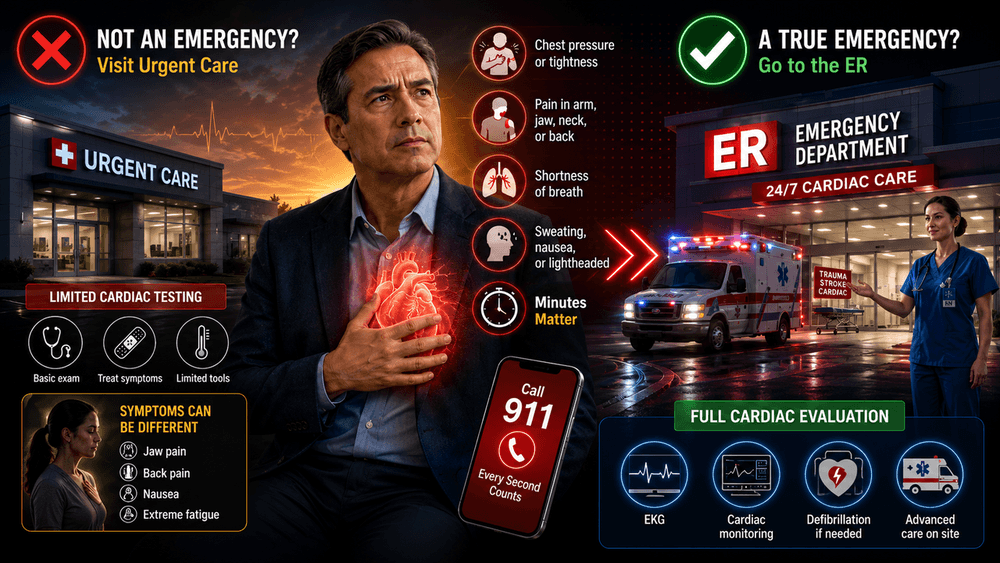
Chest Pain: ER or Urgent Care? The Life-Saving Decision Guide
You feel tightness in your chest. It has been there for twenty minutes. You are Googling "chest pain ER or urgent care" while simultaneously wondering if you are overreacting. Your heart is racing, but is that the problem, or just anxiety about the problem?
That pressure in your chest could be a heart attack. Or indigestion. Or a pulled muscle. Or anxiety. The internet just gave you twelve different answers ranging from "call 911 now" to "take some Tums." You need clarity, and you need it fast.
Let us be direct: if you are reading this while experiencing chest pain, the answer is probably the ER. But you are here because you are unsure whether your specific situation warrants it. Here is how to know, and why the default answer for chest pain is always emergency care.
Key Takeaways
- For new or unexplained chest pain, the default answer is the ER, not urgent care. When in doubt, call 911.
- Urgent care cannot rule out a heart attack. It lacks serial troponin testing, cardiac monitoring, and on-call cardiologists.
- Every 30-minute delay in treatment raises one-year mortality by about 7.5%. Time is muscle.
- Women, elderly patients, and diabetics often have atypical or "silent" symptoms. About 25% of heart attacks are silent.
- An ER chest pain workup runs $2,000-$5,000+, but under EMTALA, the ER must treat regardless of ability to pay, and bills are negotiable.
Stop: Are You Having These Symptoms Right Now?
If you are experiencing ANY of the following, stop reading and either call 911 immediately OR have someone drive you to the ER now. Do NOT drive yourself.
Go to the ER immediately if you have:
- Chest pain or pressure, especially a squeezing, crushing, or tight feeling
- Chest pain WITH any of these: pain radiating to the arm, jaw, neck, back, or stomach; shortness of breath or difficulty breathing; sweating, especially cold sweats; nausea or vomiting; lightheadedness or dizziness; rapid or irregular heartbeat; a feeling of impending doom; pale or gray skin color
- Chest pain that came on suddenly and is severe
- Chest pain that is getting worse
- Chest pain lasting more than 5 minutes
- Chest pain after any physical exertion
Important: Heart attacks do not always present as dramatic Hollywood-style crushing pain. According to the American Heart Association, approximately 25% of heart attacks are "silent," with symptoms that are subtle or attributed to other causes, especially in women, elderly patients, and people with diabetes (source: Heart.org, "Silent Heart Attack: What You Need to Know").
If you are experiencing these symptoms, you do not need the rest of this article. You need emergency care NOW. Not sure whether to dial or drive? See our guide on when to call 911 versus going to the ER.
Still reading? Then your chest pain may be less urgent. Keep reading for guidance on when urgent care might be appropriate, though that list is much shorter than you think.
Why the Default Answer Is Always 'ER' for Chest Pain
Here is the medical reality that every emergency physician wants you to understand: urgent care centers cannot rule out heart attacks. They lack the critical capabilities that only emergency rooms provide, as established by guidelines from the American College of Emergency Physicians. If you want the full breakdown of each setting, see our comparison of the emergency room versus urgent care.
What Urgent Care Cannot Do
Urgent care facilities do not have cardiac catheterization labs, the specialized equipment needed to open blocked arteries during heart attacks. They have limited or no troponin testing, the cardiac enzyme blood test that detects heart muscle damage. According to the American Heart Association's 2021 guidelines on chest pain evaluation, serial troponin measurements taken at 0 hours and 3 to 6 hours after presentation are essential for diagnosing heart attacks (source: Circulation, "2021 AHA/ACC Guideline for the Evaluation and Diagnosis of Chest Pain").
Urgent care centers do not have cardiologists on call. They cannot admit patients for observation or monitoring. They lack the advanced EKG interpretation capabilities and continuous cardiac telemetry that emergency physicians use daily. If they suspect any cardiac issue, they will send you to the ER anyway, wasting critical time when every minute matters.
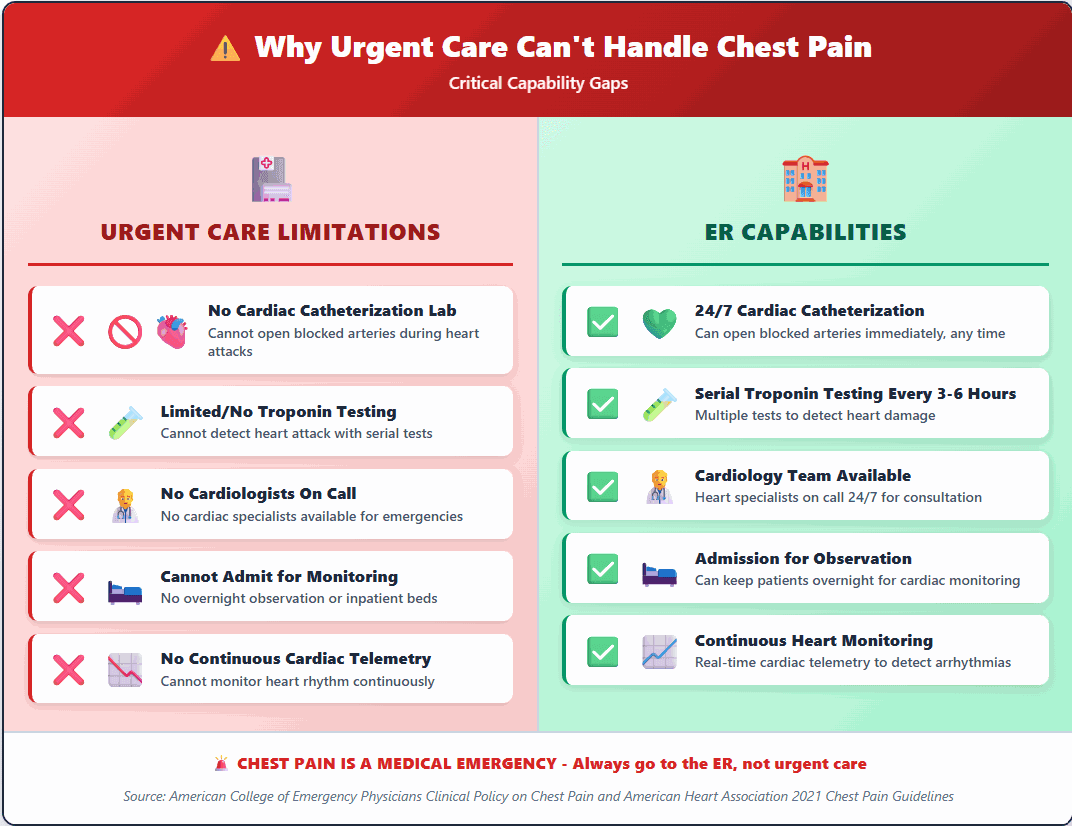
Why urgent care cannot handle chest pain, comparing missing cardiac catheterisation, troponin testing, cardiology cover and monitoring against full emergency room capabilities
What the ER Can Do That Urgent Care Cannot
Emergency rooms run serial troponin tests measured over hours, provide continuous cardiac monitoring, and offer immediate cardiology consultation. They have cardiac catheterization capabilities to perform procedures to open blocked arteries, can admit patients for observation following standardized chest pain protocols, and perform advanced imaging like CT angiography to detect pulmonary embolism or aortic dissection. ERs can administer emergency medications, including clot-busting drugs and antiplatelet therapy, and provide immediate life-saving interventions.
The Time Factor: Why Minutes Matter
For the most severe type of heart attack, the American College of Cardiology and American Heart Association recommend opening the blocked artery within 90 minutes of arrival. Cardiologists use the phrase "time is muscle." Every 30-minute delay in treatment results in approximately a 7.5% relative increase in one-year mortality, according to research published in Circulation (source: De Luca et al., "Time Delay to Treatment and Mortality in Primary Angioplasty").
Going to urgent care first, only to be transferred to the ER, can add 30 to 90 minutes to your overall care time. That delay represents the difference between full recovery and permanent disability or death.
The Risk-Benefit Calculation
Consider the risks. Going to the ER unnecessarily costs time and money: annoying but not catastrophic. Not going to the ER when you actually need it risks death or permanent heart damage, stroke, pulmonary embolism, or aortic dissection. These are not comparable risks. One is an inconvenience. One is life-altering or fatal.
Emergency physicians see this every shift: patients who waited too long trying to figure out if they "really needed" the ER. The consistent message from ER doctors is simple. If you are genuinely unsure about chest pain, come to the ER. They would rather check you and send you home than have you guess wrong. ER doctors rarely consider a chest pain visit unnecessary, but they routinely see patients who waited because they did not want to overreact and ended up with permanent heart damage.
The Rule for Chest Pain
When in doubt about chest pain, go to the ER.
Why?
- Urgent care cannot rule out heart attacks per the ACEP clinical policy
- "Time is muscle" for cardiac events. Every 30-minute delay increases mortality by 7.5%
- Symptoms cannot reliably distinguish cardiac from non-cardiac causes
- The cost of being wrong is too high
Even if you are 90% sure it is nothing serious, that 10% uncertainty is too much risk with chest pain.
ER doctors would rather see 100 cases of heartburn than miss one heart attack.
Types of Chest Pain: Why You Cannot Self-Diagnose
Understanding different types of chest pain helps you describe symptoms to doctors. It does NOT mean you should diagnose yourself. When in doubt, go to the ER.
Cardiac Chest Pain Characteristics
The following table compares cardiac versus non-cardiac chest pain characteristics based on American Heart Association clinical guidelines:
| Characteristic | Cardiac Pain | Non-Cardiac Pain | Why Testing Matters |
|---|---|---|---|
| Quality/Feeling | Pressure, squeezing, tightness, heaviness, crushing ("elephant on chest") | Sharp, stabbing, burning, or aching | Overlap exists. Cardiac pain can feel sharp; non-cardiac can feel pressure-like |
| Location | Center or left chest; may radiate to arms, jaw, neck, back, stomach | Localized to a specific point; chest wall; upper abdomen | Radiation patterns overlap. GERD can radiate to the jaw; musculoskeletal pain can be central |
| Duration | Usually more than 5 minutes; may be constant or come and go in waves | Variable. Can be seconds (musculoskeletal) or hours (GERD) | Duration alone cannot rule in or out cardiac causes |
| Triggers | May occur during exertion OR at rest; emotional stress | Specific movements (musculoskeletal); eating (GERD); breathing (pleuritic) | Cardiac pain can occur at rest in 50% of heart attacks |
| Relief | NOT relieved by position change, antacids, or rest (except stable angina) | May improve with position, antacids, rest, or stretching | 10-30% of patients with cardiac pain report relief from antacids |
| Associated Symptoms | Shortness of breath, diaphoresis, nausea, lightheadedness, sense of doom | Usually isolated pain; may have cough (respiratory) or belching (GERD) | Absence of associated symptoms does NOT rule out heart attack |
Other serious cardiac causes:
Angina (reduced blood flow to the heart) presents similarly to heart attack pain but is usually triggered by exertion or stress and relieved by rest within 5 to 10 minutes. However, new or changing angina patterns (unstable angina) require immediate ER evaluation, as they signal an impending heart attack.
Aortic dissection causes sudden, severe, tearing or ripping chest pain radiating to the back and has 20% mortality within 24 hours without treatment. Pericarditis presents with sharp chest pain that worsens when lying down and improves when sitting forward, often following a viral illness. Pulmonary embolism causes sudden chest pain with shortness of breath, may include coughing blood, and has a 15-30% mortality if untreated.
Non-Cardiac Chest Pain Types
Musculoskeletal pain accounts for approximately 25-50% of non-cardiac chest pain presenting to ERs. It presents as sharp, stabbing pain that worsens with movement, breathing, or pressing on the chest. It is localized to a specific spot you can point to and results from injury, strain, or costochondritis (rib inflammation).
Gastrointestinal causes such as gastroesophageal reflux disease (GERD) produce a burning sensation, often after eating, that may respond to antacids and can radiate to the throat. Studies show GERD accounts for 30-60% of non-cardiac chest pain.
Anxiety or panic attacks cause sharp or stabbing pain, may come with hyperventilation, racing heart, and tingling hands, and usually present as brief episodes. However, panic disorder is diagnosed in only 25-58% of patients initially presenting with chest pain attributed to anxiety.
Respiratory issues from pneumonia, bronchitis, or pleurisy cause pleuritic pain (sharp pain with breathing), often accompanied by cough and fever.
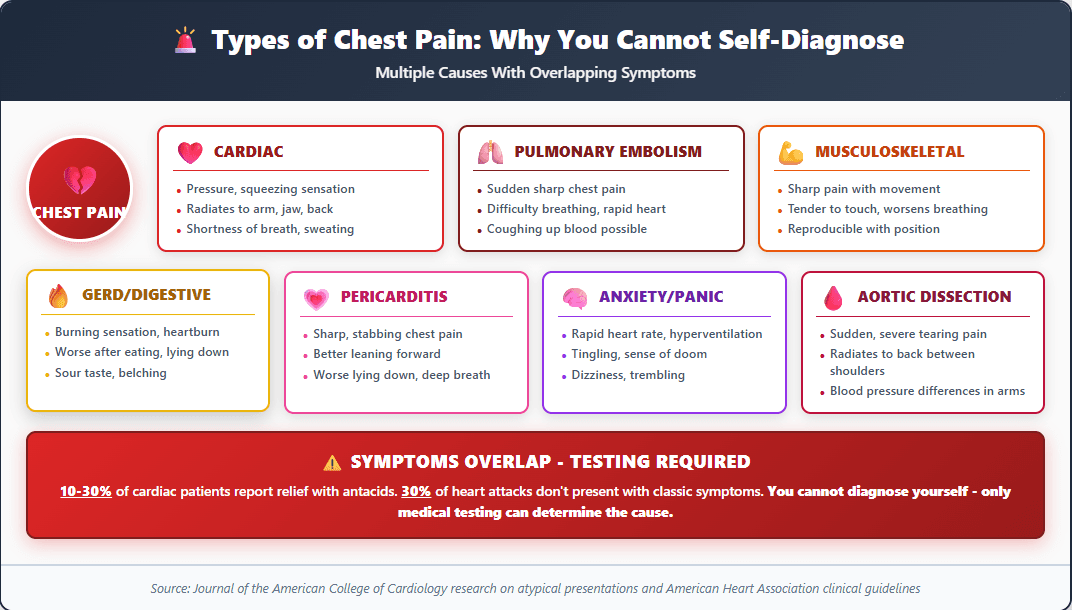
Types of chest pain with overlapping symptoms including cardiac, GERD, pericarditis, pulmonary embolism, musculoskeletal, anxiety and aortic dissection, showing why testing is required
The Critical Problem: Overlap
Here is what makes chest pain so dangerous to self-diagnose: Non-cardiac chest pain can mimic cardiac chest pain perfectly. Even experienced emergency physicians cannot always tell the difference without testing. That is why the ER has comprehensive testing protocols established by medical guidelines, and urgent care does not.
Research published in the Journal of the American College of Cardiology shows that up to 30% of patients with acute heart attacks do not present with classic symptoms. Even what feels like typical "heartburn" can be a heart attack. Studies show 10-30% of patients with cardiac ischemia report symptom relief from antacids, leading to dangerous misdiagnosis.
The takeaway: if you are using this section to diagnose yourself and skip the ER, stop. This information helps you describe symptoms to medical professionals, not diagnose yourself. You cannot reliably distinguish cardiac from non-cardiac chest pain without troponin testing, serial EKGs, and cardiac monitoring, all of which are available only in emergency departments.
When Chest Pain Might Not Need the ER
This is the shortest section in this article for a reason: very few chest pain scenarios do not warrant ER evaluation. If you are looking for permission to skip the ER, you probably will not find it here.
Situations Where Urgent Care Might Be Appropriate
According to the American College of Emergency Physicians guidelines, urgent care or primary care might be appropriate ONLY for chronic, previously diagnosed conditions with a documented negative prior cardiac workup. This includes costochondritis (rib inflammation) with a familiar pain pattern confirmed by a prior physician diagnosis; known GERD with typical symptoms that respond to antacids and a prior endoscopy that ruled out serious causes; or chronic musculoskeletal pain from a known injury previously evaluated with imaging.
But ONLY if: the pain pattern is the same as previously evaluated episodes, you have had a comprehensive cardiac evaluation (stress test, echocardiogram, or cardiac catheterization) within the past year, ruling out coronary artery disease, you have no new or concerning symptoms, the pain is not worsening, and you are not experiencing any cardiac symptoms listed earlier.
Important Caveats
Even for these "lower risk" situations, go to the ER if you are over 40 with cardiac risk factors (smoking, diabetes, hypertension, high cholesterol, family history of premature coronary disease), symptoms change from your usual pattern, pain is severe even if you think it is musculoskeletal, or this is the first time experiencing this type of chest pain.
The reality, per American Heart Association statistics, is that approximately 5.8 million ER visits annually in the United States are for chest pain, and roughly 5 to 15% are ultimately diagnosed with acute coronary syndrome. The "safe to skip ER" category is much smaller than people think. When in doubt, default to the ER.
Special Populations: Women, Elderly, and Diabetics
If you are a woman, over 65, or diabetic, the "classic" heart attack symptoms do not apply to you. This section could save your life.
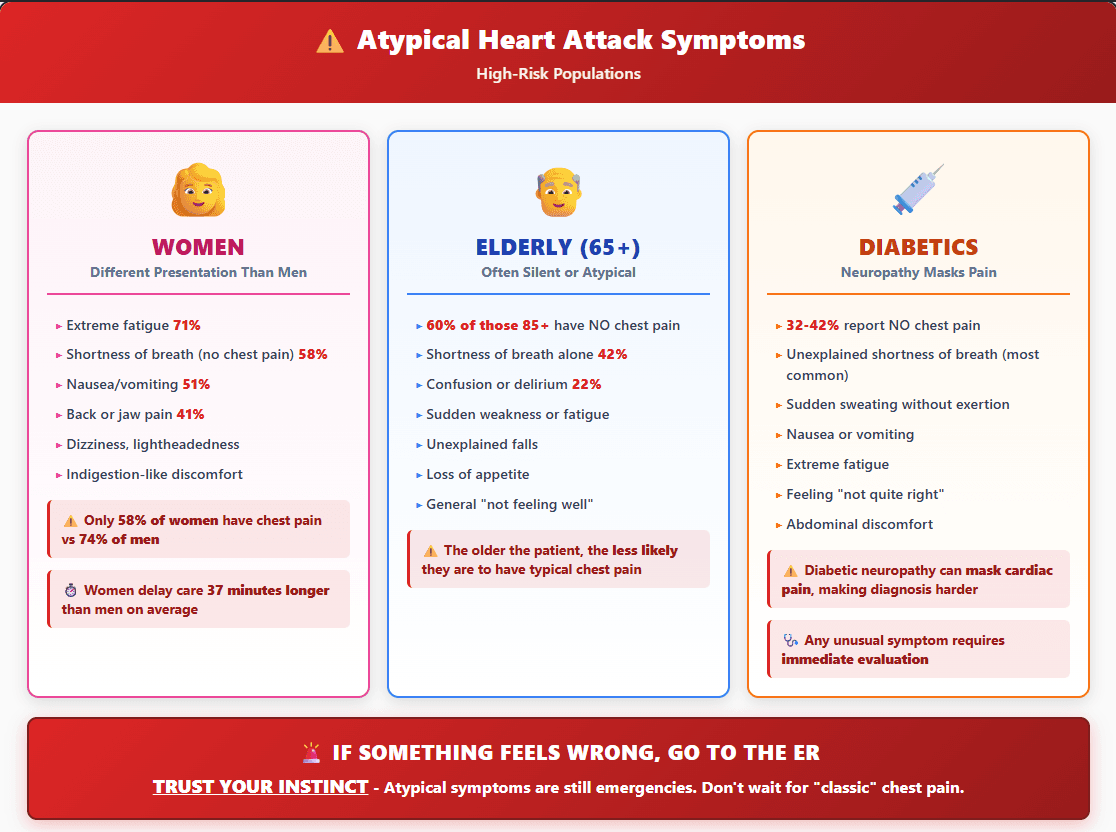
Atypical heart attack symptoms in high risk groups: only 58 percent of women have chest pain versus 74 percent of men, 60 percent of people over 85 have none, and 32 to 42 percent of diabetics report no chest pain
Women's Heart Attack Symptoms
Classic symptoms are LESS common in women. According to the American Heart Association's 2021 statistical update, only 58% of women with acute heart attacks report chest pain, compared to 74% of men (source: Circulation, "Acute Myocardial Infarction in Women: A Scientific Statement").
Women more commonly experience unusual fatigue (71% of women vs. 40% of men), shortness of breath without chest pain (58% vs. 44%), nausea or vomiting (51% vs. 32%), back pain or jaw pain (41% vs. 28%), an indigestion-like sensation, sleep disturbances in the weeks before a heart attack, anxiety or a sense that something is wrong, and dizziness or lightheadedness.
The danger: research in Circulation found that women delay seeking care an average of 37 minutes longer than men, and are less likely to call 911 (53% vs. 61%). Women are also more likely to be misdiagnosed initially. They are 50% more likely than men to receive an incorrect diagnosis after a heart attack.
The message for women: If something feels wrong, even if it is not chest pain, go to the ER. Multiple studies have validated women's self-assessment of cardiac symptoms. Your intuition about your own health is powerful. Trust it.
Elderly Patients (Over 65)
Atypical presentations are common in elderly patients. According to research in JAMA Internal Medicine, up to 60% of patients over 85 with acute heart attacks present without chest pain. They may have silent heart attacks with no pain at all, confusion or delirium as the primary symptom (22% of elderly heart attack patients), sudden weakness or fatigue, unexplained falls, shortness of breath alone (42% of elderly patients), or simply feeling "unwell."
Why? Age-related changes in the nervous system decrease pain perception. Multiple medications, including beta-blockers and calcium channel blockers,s can mask rapid heartbeat and other typical cardiac symptoms. Cognitive impairment may prevent accurate symptom reporting.
The message for elderly patients: if an elderly person is "acting different," confused, showing sudden functional decline, or demonstrating new symptoms, even without chest pain, ER evaluation is warranted per geriatric emergency medicine guidelines.
Diabetic Patients
Diabetic autonomic neuropathy affects 20-40% of diabetic patients and significantly reduces pain perception from cardiac ischemia. People with diabetes are 2 to 4 times more likely to have "silent" heart attacks compared to non-diabetics. In studies of diabetic patients with documented heart attacks, 32-42% reported no chest pain at all.
Symptoms to watch for in diabetic patients: unexplained shortness of breath (the most common symptom in diabetic heart attacks), sudden sweating without an obvious cause, unexplained nausea, unexplained fatigue or malaise, vague upper abdominal discomfort, or simply "not feeling right."
The American Diabetes Association recommends lower thresholds for cardiac evaluation in diabetic patient,s given their significantly elevated risk. Adults with diabetes are twice as likely to have heart disease or stroke compared to adults without diabetes.
The message for people with diabetes: diabetes dramatically increases heart attack risk and masks symptoms. People with diabetes should have a much lower threshold for ER visits for any concerning symptoms, even if subtle.
Interventional cardiologists treat too many women, elderly patients, and people with diabetes whose heart attacks were missed or delayed because their symptoms did not match the textbook description. These patients often apologize for "wasting our time" when they actually saved their own lives by coming in. Atypical presentations are exactly why symptom checklists do not work for chest pain. If something feels wrong, come to the ER.
The Cost Reality: The Uncomfortable Conversation
Let us talk about what you are thinking: an ER visit for chest pain can cost $2,000-$5,000+ depending on tests ordered, according to 2023 Healthcare Cost and Utilization Project data. That is terrifying when you are not sure if you are having a heart attack or just gas.
The Brutal Cost Comparison
An ER chest pain evaluation typically includes: EKG ($200-$500), serial troponin blood tests measured over hours ($200-$500), chest X-ray ($200-$400), possible CT angiography ($1,000-$3,000), physician fees ($500-$1,500), and observation if needed ($2,000-$5,000+). Total cost often reaches $2,000-$5,000+ just for evaluation before any intervention.
Compare that to an urgent care visit at $100-$300, but urgent care cannot definitively rule out heart attacks. Also compare it to the cost of heart attack treatment with delayed care. According to the American Heart Association's 2023 Heart Disease and Stroke Statistics, the lifetime cost of acute coronary syndrome ranges from **$ 150,000+, including treatment, rehabilitation, medications, and lost productivity, PLUS permanent disability and reduced quality of life.
Insurance Coverage and Legal Protections
Most insurance plans cover ER visits for true emergencies, and chest pain qualifies under prudent layperson standards established by the Affordable Care Act. Under the Emergency Medical Treatment and Labor Act (EMTALA), codified at 42 U.S.C. Section 1395dd and enacted in 1986, emergency departments must provide a medical screening examination and stabilizing treatment to anyone who presents, regardless of insurance status or ability to pay.
Pre-authorization is never required for genuine emergencies under EMTALA. The No Surprises Act, effective January 1, 2022, provides federal protection against surprise balance billing from out-of-network emergency services. However, deductibles, copays, and coinsurance still apply, and bills can be substantial.
All patient information obtained during ER evaluation is protected under the Health Insurance Portability and Accountability Act (HIPAA), specifically the Privacy Rule codified at 45 CFR Part 160 and Part 164, Subparts A and E, which establishes national standards for protecting individually identifiable health information. ERs cannot share your medical information without your consent except in specific circumstances permitted by HIPAA (treatment, payment, healthcare operations, required by law).
The Calculation That Matters
Here is what every ER doctor wants you to understand: you can negotiate ER bills. Many hospitals have financial assistance programs required under IRS Section 501(r) for nonprofit hospitals, which mandate financial assistance policies and limits on charges. Payment plans are available. Medical debt, while burdensome, is considered unsecured debt under bankruptcy law.
What you CANNOT do is reverse heart damage from delayed treatment. You cannot undo a fatal heart attack. Research shows that patients who delayed ER care for chest pain due to cost concerns had a 2.3 times higher rate of major adverse cardiac events and ultimately 40% higher total healthcare costs due to complications from delayed treatment.
Hospital financial counselors tell patients the same thing: they will help you figure out the bill later. Hospitals have charity care programs, financial counselors, and payment plans, and under IRS regulations, nonprofit hospitals must provide financial assistance. But none of that helps if you die at home trying to save money. The bill is negotiable. Your health is not.
If cost is the only thing stopping you from ER evaluation for chest pain, please go anyway. Financial assistance exists. Death is permanent.
Two Illustrative Scenarios: The Same Symptom, Two Outcomes
Scenario One, Age 47: The Cost of Waiting
Consider a typical case. A 47-year-old wakes up with an unusual pressure in her chest and tells herself it is probably nothing, that she is too young for a heart attack. It is Wednesday morning, and there is a big presentation at work. The pressure is not that bad, maybe a 4 out of 10, and she convinces herself it is just stress or something she ate.
She Googles "chest pain," and everything says go to the ER, but she also sees that most chest pain is not cardiac. She does not want to be the person who goes to the ER for gas, and she does not feel she has time for a 4-hour ER visit.
By lunch, she is sweating and feeling nauseous, but she is in the middle of her presentation. She tells herself she will go to urgent care after work if it is not better. Around 3 PM, her arm starts hurting. That is when she finally admits something is wrong.
She is having a heart attack and has been for seven hours. By the time she gets treatment, she has significant heart damage with an ejection fraction down to 35%. Now she is on medications for life, her exercise tolerance is limited, and she effectively has heart failure at 47. If chest pain is your symptom, do not wait: call 911, or browse emergency rooms by state to know your nearest options in advance.
An interventional cardiologist later explains that if she had come in that morning when symptoms started, they could have opened the blockage with minimal damage. Seven hours of denial cost her heart function. The lesson: if something feels wrong, just go.
Scenario Two, Age 52: Worth Every Penny
Now consider a different outcome. A 52-year-old feels chest tightness while watching TV on a Saturday night, a pressure like someone squeezing. It lasts about 20 minutes, then eases, then comes back. He has hypertension, and his father had a heart attack at 55, so he fears this is it.
His wife wants to call 911, but he wants to see if it goes away first. It does not. Finally, around 11 PM, he agrees to go to the ER, feeling ridiculous and worried that it is just gas and a waste of everyone's time.
At the ER, he is taken back immediately because chest pain gets triaged fast. They do an EKG right away and draw blood for troponins. The ER physician tells him he absolutely did the right thing coming in, because chest pain is never something to mess with. They keep him for observation and repeat troponins at 3 hours and 6 hours per the chest pain protocol.
It turns out not to be a heart attack. Troponins are negative, and the EKG is normal. The likely cause is esophageal spasm or anxiety. The bill comes to $3,400 before insurance. The cost stings, but the ER doctor reinforces that they would rather evaluate a hundred people with heartburn than miss one heart attack. He made the right call.
The peace of mind of knowing it was not his heart was worth every penny. And if it had been a heart attack, those few hours could have saved his life.
How the ER Evaluates Chest Pain
Understanding what happens at the ER helps set realistic expectations and reinforces why urgent care cannot provide equivalent care.
What Happens When You Arrive
You will receive immediate triage. Chest pain is considered emergent or urgent per Emergency Severity Index guidelines used across the large majority of U.S. emergency departments. You are brought to a treatment area quickly. Per American College of Emergency Physicians clinical policy and American Heart Association guidelines, an EKG must be performed within 10 minutes of arrival for patients with possible acute coronary syndrome.
An IV is placed, and blood is drawn for cardiac troponin testing. A physician conducts an evaluation and takes a detailed history, including cardiac risk factors, medication use, and symptom characteristics. A chest X-ray is typically ordered to evaluate for pneumonia, pneumothorax, or heart failure.
The Chest Pain Protocol
The ER follows standardized chest pain protocols established by the American Heart Association and American College of Cardiology guidelines that include serial cardiac troponin testing: an initial draw at presentation (0 hours), then a repeat at 3 hours and/or 6 hours. High-sensitivity troponin assays can detect myocardial injury earlier, with some protocols using 0-, 1-, or 2-hour testing.
Why serial testing matters: troponin I and troponin T are regulatory proteins released when cardiac muscle cells are damaged. Troponin levels rise 3 to 6 hours after myocardial injury begins, peak at 12 to 48 hours, and remain elevated for 7 to 14 days. A single negative troponin cannot rule out an acute heart attack. Serial measurements are essential.
You will receive continuous cardiac telemetry monitoring and an observation period of 4 to 12 hours, depending on risk stratification. Hospitals use validated risk scores, such as the HEART score or TIMI risk score, to determine disposition.
Additional Tests if Needed
Based on clinical presentation and risk stratification, additional tests may include:
- Exercise or pharmacologic stress testing (if low-risk with negative troponins)
- CT coronary angiography (sensitivity 95-99% for significant coronary stenosis)
- CT pulmonary angiography for suspected pulmonary embolism
- CT aortography for suspected aortic dissection
- Transthoracic echocardiography to assess wall motion abnormalities
- Emergent cardiac catheterization if STEMI is confirmed on EKG
Possible Outcomes and Time Investment
If an acute heart attack is confirmed, you will undergo an emergent procedure to open blocked arteries with possible stent placement, targeting a door-to-balloon time under 90 minutes, and hospital admission to the cardiac ICU. For unstable angina or non-STEMI heart attacks, cardiology consultation, medical management, possible cardiac catheterization within 24 to 72 hours, and hospital admission follow. If a non-cardiac cause is identified (e.g., GERD, musculoskeletal issues), you will be discharged with appropriate follow-up instructions. If testing is negative but you are at intermediate risk, you may be discharged with an outpatient stress test scheduled within 72 hours.
Expect a minimum of 4 to 8 hours for a low-risk chest pain observation protocol, possibly 12 to 24 hours for intermediate-risk evaluation, and admission if acute coronary syndrome is confirmed or if there are ongoing symptoms with unclear etiology. To set expectations before you go, see our guide on what to expect from ER wait times.
Yes, it is time-consuming. Yes, it can be expensive. But chest pain protocols exist because they save lives. Research shows adherence to evidence-based chest pain protocols reduces missed heart attack rates to less than 1% and reduces mortality by 15-20%. The testing is thorough because the stakes are too high to miss a diagnosis.
Action Plan: What to Do Right Now
If You Are Experiencing Chest Pain Now
Take action immediately if: pain is moderate to severe (greater than 4 out of 10), pain lasts more than 5 minutes, you have any associated symptoms (sweating, nausea, shortness of breath, arm or jaw pain), pain is new or different from previous chest discomfort, or you have cardiac risk factors (age over 45 for men or over 55 for women, hypertension, diabetes, high cholesterol, smoking, family history).
Do this now:
- Call 911 for severe symptoms (chest pain greater than 7 out of 10, difficulty breathing, altered mental status) OR have someone drive you to the ER. Never drive yourself
- Take aspirin if available and not allergic: chew 325 mg uncoated aspirin (chewing increases the absorption rate)
- Sit down, stay calm, and loosen tight clothing
- If prescribed nitroglycerin for angina, take it sublingually as directed (may repeat every 5 minutes up to 3 doses)
- Do not eat or drink anything (in case cardiac catheterization is needed)
Why call 911? Ambulance transport reduces door-to-balloon time by an average of 15 minutes. Paramedics can transmit your EKG to the ER for earlier activation of the cath lab team, and patients arriving by ambulance bypass the waiting room triage. For the full criteria, read when to call 911 versus going to the ER.
When Wait Times Matter (Rarely) for Chest Pain
NEVER check wait times for new, unexplained chest pain or potential cardiac symptoms. Go to the nearest ER immediately per American Heart Association guidelines.
Wait time checking MAY be appropriate ONLY for:
- Previously evaluated musculoskeletal chest pain with a documented prior negative cardiac workup
- Chronic costochondritis diagnosed by a cardiologist or rheumatologist
- Follow-up care after a comprehensive cardiac evaluation (stress test, echo, or catheterization) ruled out coronary disease
For potentially cardiac chest pain, proximity matters infinitely more than wait times. Every 30-minute delay increases mortality by 7.5%. In the limited, previously cleared situations above, you can find the nearest emergency room and compare real-time wait times before you leave.
If You Are Not Currently Experiencing Chest Pain (Preparation)
Know your risk factors for coronary disease:
- Age (men 45 and over, women 55 and over)
- Family history of premature coronary disease (male relative under 55, female relative under 65)
- Current cigarette smoking
- Hypertension (blood pressure 140/90 or higher, or on blood pressure medication)
- Low HDL cholesterol (less than 40 mg/dL)
- Diabetes mellitus
Have ready for an ER visit:
- Complete medication list (including supplements and over-the-counter medications)
- Insurance information (card and policy number)
- Emergency contacts
- List of allergies
- Prior cardiac testing results, if available
- Advance directives, if you have them
For a complete checklist, see our guide on what to bring to the ER.
Discuss with your primary care physician:
- Your personal cardiac risk assessment
- Whether a screening stress test or coronary calcium scoring is appropriate
- Daily aspirin use (only if recommended, since aspirin has bleeding risks)
- A nitroglycerin prescription if you have angina
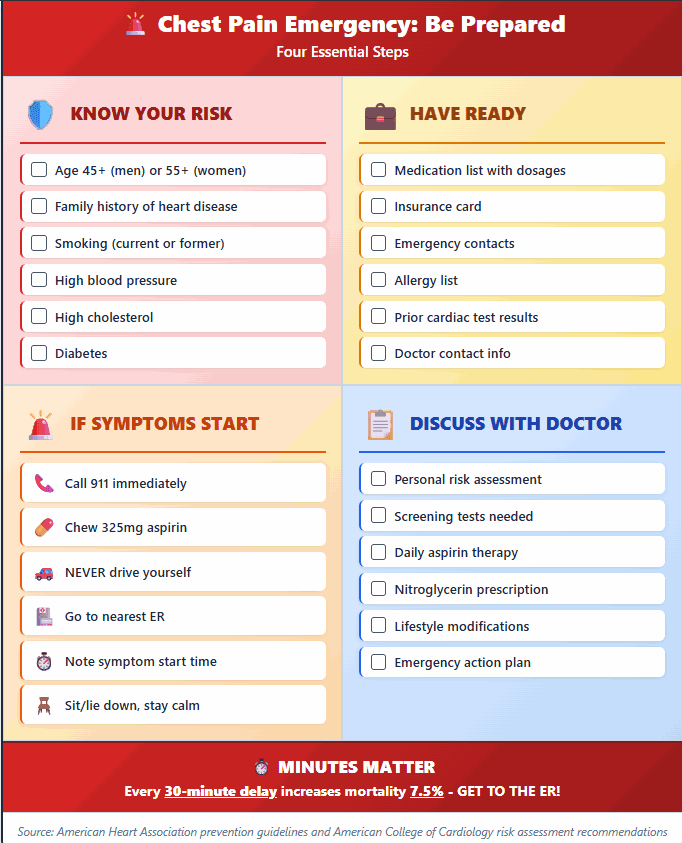
Four steps for a chest pain emergency: know your risk, have documents ready, call 911 and chew aspirin if symptoms start, and discuss a plan with your doctor
The Bottom Line
If you take nothing else from this article, remember: chest pain is the one symptom where you should always err on the side of caution, per the guidelines of every major medical organization. The American Heart Association, the American College of Cardiology, the American College of Emergency Physicians, and the American College of Physicians all recommend a low threshold for ER evaluation of chest pain. The ER exists for exactly this reason. Use it.
Experienced emergency physicians say they have never once regretted a patient coming in for chest pain, even when troponins were negative, and the patient went home. But they have seen too many family members apologizing in the ICU or worse because their loved one delayed care, trying to tough it out, or avoiding the ER bill. Do not let cost, embarrassment, or uncertainty stop you. When it comes to chest pain, the ER wants you there. Always.
Frequently Asked Questions: Chest Pain
Should I go to urgent care or the ER for chest pain?
Almost always go to the ER. Urgent care cannot rule out heart attacks, as they lack serial troponin testing, cardiac monitoring, and cardiologists. Only consider urgent care for chronic, previously diagnosed conditions (like costochondritis) with identical symptoms AND a prior comprehensive cardiac workup that was negative within the past year.
How do I know if my chest pain is serious enough for the emergency room?
Go to the ER if chest pain is accompanied by arm, jaw, or back pain, shortness of breath, sweating, nausea, or lightheadedness, lasts over 5 minutes; or feels crushing. Remember: 25% of heart attacks are "silent," and women, elderly patients, and diabetics often have atypical symptoms. If you are questioning whether it is serious enough, go to the ER.
Can chest pain from anxiety or panic attacks be treated at urgent care instead of the ER?
Only if you have had panic attacks previously diagnosed by a cardiologist or psychiatrist, and the symptoms are identical. For first episodes or different symptoms, go to the ER. Only 25-58% of chest pain initially attributed to anxiety is actually panic disorder. You cannot distinguish panic from cardiac events without testing available only in ERs.
What if I have had the same chest pain before, and it was not serious? Do I still need the ER?
Only skip the ER if you have had a comprehensive cardiac workup (stress test, echo, or catheterization) within 12 months that ruled out coronary disease, and the pain is exactly the same. Go to the ER if the pain pattern changed, you have new risk factors, the cardiac evaluation was over a year ago, or you have any new symptoms.
How much does it cost to go to the ER for chest pain compared to urgent care?
The ER costs $2,000-$5,000+ versus urgent care at $100-$300, but urgent care will likely transfer you to the ER anyway, adding 30 to 90 critical minutes and charging for both visits. Delayed heart attack treatment costs $50,000-$150,000+ with permanent disability. Most insurance covers ER chest pain, and under EMTALA, ERs must treat regardless of ability to pay.
What are the symptoms of a heart attack in women that might not seem like typical chest pain?
Women more commonly experience extreme fatigue (71%), shortness of breath without chest pain (58%), nausea (51%), back or jaw pain (41%), or just a feeling that "something is wrong." Only 58% have chest pain, compared with 74% of men. Women delay care 37 minutes longer and are 50% more likely to be misdiagnosed. Trust your instinct and go to the ER.
Can I check ER wait times before going for chest pain?
No. For new or unexplained chest pain, go to the nearest ER immediately without checking wait times. Every 30-minute delay increases mortality by 7.5%. Wait time checking is appropriate only for previously evaluated musculoskeletal pain with a documented negative cardiac workup. For potentially cardiac chest pain, call 911. Ambulance transport reduces treatment time by 15 minutes.
What happens if I go to urgent care for chest pain and they send me to the ER?
You lose 30 to 90 critical minutes through double registration, evaluation, and transfer, causing additional permanent heart damage, with every 30-minute delay increasing mortality by 7.5%. You will also pay for both visits. Under EMTALA, urgent care must transfer any chest pain that they cannot definitively diagnose as non-cardiac. If there is any chance it is serious, start at the ER.
This article is for informational purposes only and is not a substitute for professional medical advice. In an emergency, call 911.